El Faro Latino Calls on MIREX to Disclose JCE Bank Accounts Abroad

New York. – In an unprecedented move, the newspaper El Faro Latino formally requested on the morning of Tuesday, August 19, that the Dominican Republic’s Ministry of Foreign Affairs (MIREX), under the provisions of the Law on Free Access to Public Information (Law 200-04), disclose all details regarding bank accounts opened in the name of MIREX for use by the Central Electoral Board (JCE) abroad.
The request comes amid escalating legal tensions following the JCE’s refusal to provide financial reports on the 2024 Dominican elections held abroad. El Faro Latino had requested these documents as part of an investigative report into allegations of embezzlement in the three overseas constituencies, to confirm or dismiss suspicions of irregularities in the use of electoral funds.

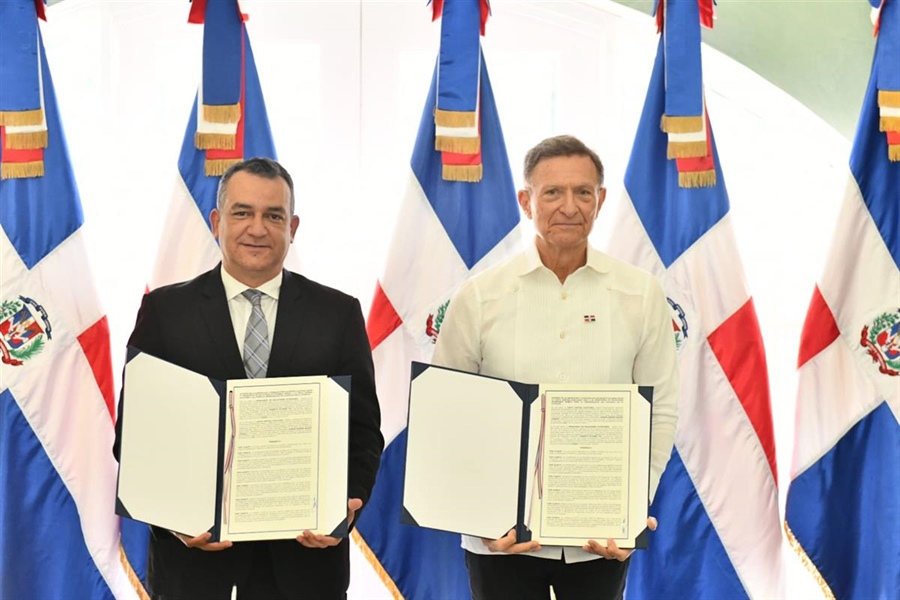
The demand directed at MIREX stems from a cooperation agreement signed between the ministry and the JCE. Under the instrument signed by Foreign Minister Roberto Álvarez and JCE President Román Jáquez Liranzo, both institutions pledged to manage the permits required for holding elections abroad promptly, as established in Article 126 of the Organic Law on the Electoral Regime No. 20-23.
The agreement also stipulates that MIREX notify public order authorities in host countries of the elections, expedite the dispatch of electoral packages overseas, and assist the JCE in opening bank accounts abroad, among other provisions.

The use of the Law 200-04 as a legal resource is fully justified. The MIREX Transparency Portal, aligned with this law and its regulations, requires the ministry to make publicly available information such as organizational structures, legal basis, management reports, and other relevant details.
At the same time, the JCE, an autonomous and budget-independent institution, has its own Office of Access to Information. Established under Resolution No. 001-2006, the office must respond to requests within 15 days, as mandated by Law 200-04 and its regulations, or within five days under the “JCEResponde” program.
El Faro Latino’s request is not limited to institutional transparency; it seeks to determine whether there was mismanagement or embezzlement of electoral funds destined for the Dominican diaspora. So far, the JCE’s refusal to release the reports has fueled suspicions, which are further driven by accounts circulating within Dominican communities abroad.
The Legal Battle in the Courts
The standoff between El Faro Latino and the JCE began on October 22, 2024, when the newspaper requested a detailed financial report on the use of electoral funds overseas, invoking Law 200-04. Weeks later, on November 12, the JCE informed the outlet that it was invoking the law’s exceptional extension period. On December 11, with the deadline expired and no documents delivered, El Faro Latino accused the electoral body of obstructing the investigation into alleged embezzlement.
On March 5, 2025, the outlet filed an action for constitutional protection (amparo) before the Superior Administrative Court (TSA) against the JCE, its president Román Jáquez Liranzo, and other members of the board, for failing to release the requested financial information. The TSA scheduled a public hearing for April 9. However, on that date, JCE attorneys requested a postponement, which was granted, moving the case to May 28.
On that day, Judge Román Arturo Berroa Hiciano, president of the Fourth Chamber of the TSA, reserved his ruling indefinitely—an act which, according to El Faro Latino, amounts to a denial of justice by omission and a violation of the Dominican Constitution (Articles 69, 149, 40.15), as well as citizen protection laws such as Law 137-11 (amparo), Law 200-04 (access to information), and Law 107-13 (rights about public administration).
Subsequently, on June 27, 2025, the newspaper filed a formal complaint with the General Directorate of Ethics and Government Integrity (DIGEIG), accusing the JCE of concealing expenses related to the overseas elections. On August 15, 2025, the outlet announced it was prepared to initiate legal proceedings in the United States against the JCE, basing its case on statutes including 28 U.S.C. § 1782, the Bank Secrecy Act, the Foreign Corrupt Practices Act (FCPA), and federal anti–money laundering provisions (18 U.S.C. §§ 1956 and 1957).