Jean Luis Rodríguez Highlights Historic Advances in the Dominican Port Sector
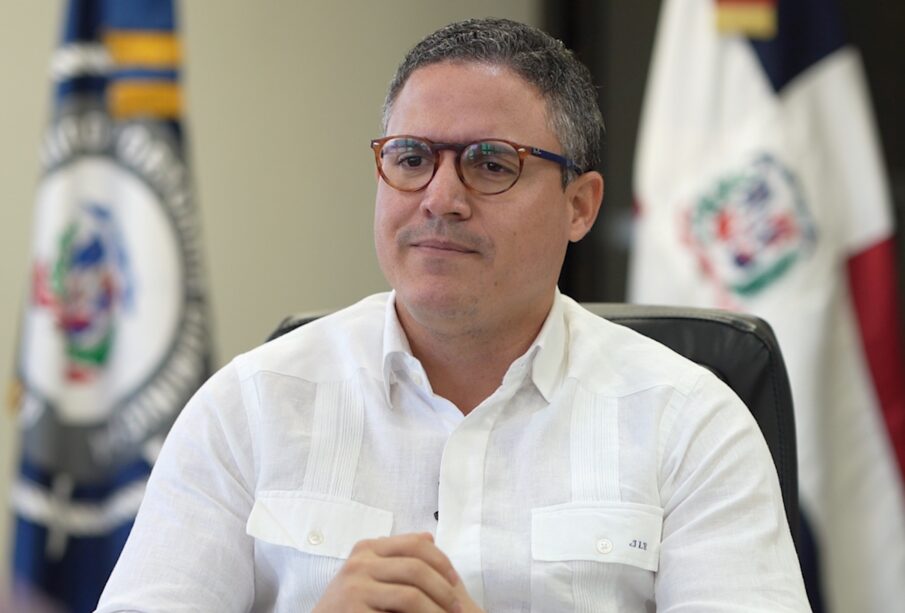

Santo Domingo, DR: Under the executive leadership of Jean Luis Rodríguez, the Dominican Port Authority (APORDOM) has undergone an unprecedented transformation, positioning the country as a leading logistical and tourism hub in the Caribbean. Since 2020, his administration has combined modernization, strategic investment, and financial strengthening, directly benefiting more than 20 coastal communities.
Through a public-private partnership with ITM Group, the Cabo Rojo Port in Pedernales has emerged as a flagship project within the region’s ambitious Tourism Development Plan. The first phase was inaugurated in early 2024, featuring a 200-meter dock capable of receiving multiple vessels simultaneously. Its official debut came with the arrival of the first cruise ship on January 4, 2024.

In just one year, the port has consolidated a steady flow of maritime operations. By 2025, it welcomed its third cruise ship, bringing more than 3,000 visitors and raising the total number of cruise passengers since its opening to over 19,600. The arrival of one of the world’s largest vessels, the Oasis of the Seas, carrying more than 8,600 passengers and crew, further established Cabo Rojo as a competitive player in Caribbean cruise tourism.
Looking ahead, the port envisions an expansive future, with projections of attracting up to one million cruise passengers annually and generating more than 5,000 direct and indirect jobs. These goals reflect APORDOM’s strategic commitment to transforming Pedernales into a modern, sustainable tourism hub with a profound socio-economic impact on the southern region of the country.

Land Titling, Sovereignty, and Major Investments in Ports.
One of the most significant achievements has been the titling of 60% of port lands in strategic enclaves such as Cabo Rojo and Haina Occidental. This process ensures the State’s patrimonial sovereignty while providing legal security for future investors.
Since 2020, accumulated investments in the national port system have surpassed US$531 million, with both public and private contributions. In Barahona, for instance, more than RD$834 million has been allocated for upgrading port facilities, enabling cruise ship arrivals to begin in 2026.
Puerto Plata saw an investment of US$101 million, giving the terminal the capacity to accommodate up to three cruise ships simultaneously, strengthening the province as one of the Caribbean’s top tourism destinations.
In Samaná, the Arroyo Barril port is advancing with a US$68 million investment through a public-private partnership. This project not only modernizes the terminal but also promises to generate between 1,000 and 1,500 direct jobs.
Meanwhile, Cabo Rojo in Pedernales received an initial US$48 million investment during its first two phases, firmly establishing it as the new tourism hub of the Dominican south.
In Azua, APORDOM carried out improvements valued at RD$14 million, while in Manzanillo, an ambitious modernization plan is underway, supported by the Inter-American Development Bank (IDB) and the Ministry of Public Works. This project, crucial for boosting agricultural exports to the United States, is expected to be completed by the end of 2026.
At the same time, Puerto Duarte is on track to become the country’s first “green port,” with solar-powered lighting, recycling systems, and energy efficiency measures that meet international sustainability standards.
Expansion, Tourism Growth, and Community Infrastructure
The Dominican Republic has expanded from three to five operational cruise terminals, with new projects underway in Barahona, Samaná, and La Romana. In 2019, the country received 1.13 million cruise passengers; by the end of 2025, that number is projected to reach 2.6 million—an increase of 140%. In 2024 alone, Taíno Bay welcomed more than 800,000 tourists.
APORDOM has also built 18 fishing and tourism docks in communities such as Palenque, Río San Juan, Cabrera, Salinas, Miches, Saona Island, and Caño del Yuti (Montecristi), surpassing the original goal of 11. Currently, three more are under construction in Haina Occidental, Sabana de la Mar, and Miches.
Financial Strengthening, Training, and Human Capital
On the financial front, the institution paid off RD$1.3 billion in debt and increased monthly revenues from RD$56 million to RD$140 million, generating an annual surplus of RD$84 million. This has enabled APORDOM to finance infrastructure projects with its funds without jeopardizing budgetary stability.
Additionally, the establishment of the National Institute for Port and Logistics Training (INPLOG) has already trained 450 students in key areas of the maritime and logistics sectors, thereby enhancing the level of professionalism in the country’s port workforce.
Outlook to 2026
Currently, Dominican ports handle around 2.3 million TEUs. With planned expansions in Haina and Caucedo, representing an additional US$300 million, the figure is expected to exceed 3 million TEUs in the coming years.
“Our plan from the beginning was clear: to recover port assets, modernize infrastructure, attract investment, and foster development in coastal communities. Today we can say we have delivered with concrete results,” stated Jean Luis Rodríguez.
With an active portfolio of projects and strategic alliances, APORDOM projects that by 2026, the Dominican Republic will solidify its position as the leading logistical and tourism hub of the insular Caribbean.