
Carolina Mejía and the Unfinished Conversation with the Dominican Diaspora
New York.– In Dominican politics, the diaspora is often referenced as a number or a memory. Remittances are mentioned. Family ties are invoked. Nostalgia is implied. Far less common is treating the diaspora as what it also is, a civic actor with real weight and an unfinished relationship with the political system. The gap between what it contributes and how little it participates is not a perception. It is measurable.
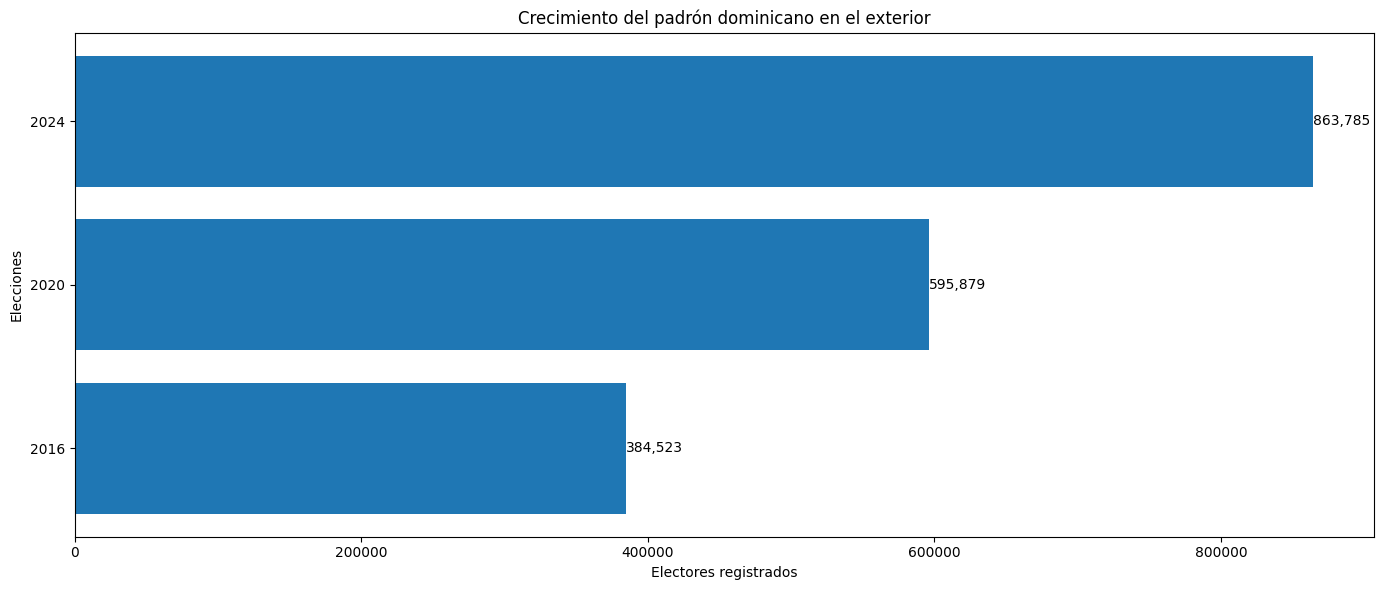
For the May 19, 2024 elections, the total voter registry reached 8,145,548 eligible voters. Of that number, 863,785 Dominicans were registered to vote from abroad. According to the Central Electoral Board, if the overseas electorate were considered a domestic district, it would be the second largest in the country, surpassed only by Santo Domingo province and larger than both the National District and Santiago.

The contrast is clear. That weight exists on paper, but not consistently in practice. The diaspora is registered, yet remains an intermittent presence in political life. It maintains strong ties to the Dominican Republic through family, travel, and culture, but participates far less in decision-making processes. In states such as New York, New Jersey, Connecticut, Pennsylvania, Massachusetts, the DMV corridor, the Carolinas, and Florida, Dominican life revolves around work, churches, small businesses, and community networks where information circulates and opinions are shaped, often outside formal political debate.
This gap is neither new nor exclusive to one party. For years, the relationship between the Dominican state and its diaspora has been episodic, defined by campaigns, promises, and symbolic gestures, but lacking sustained mechanisms for participation. That is why any attempt to engage the diaspora through governance rather than rhetoric deserves close and critical attention.
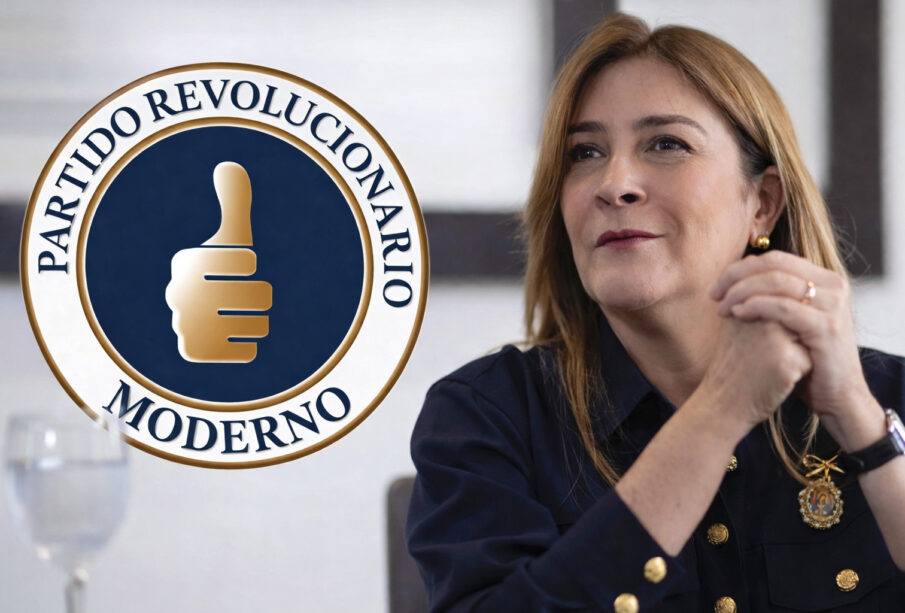
Carolina Mejía enters this space from a particular position. On one hand, she holds a central role within the Modern Revolutionary Party as its secretary general, with direct influence over internal party dynamics. On the other, she governs at the municipal level, where politics is measured less by slogans and more by visible outcomes.
As mayor of the National District, her administration has focused on urban order, the recovery of public spaces, and tangible services. Institutional reports cite interventions in 186 parks and public plazas, with 16 rebuilt in 2024 alone. For the diaspora, these indicators matter. Many migrants evaluate the Dominican state by comparing it to the public services they experience abroad, such as cleanliness, mobility, functional parks, efficient procedures, and the ability to deliver.
The language used to communicate governance also plays a role. The idea that a city cannot be transformed without its citizens may not be new, but it resonates with a generation raised outside the country. For them, Dominican politics is filtered through different expectations. Historical loyalties matter less than transparency, opportunity, education, security, technology, and institutions that work.
The economic dimension underscores why this conversation should not remain occasional. In 2025, remittances sent to the Dominican Republic reached 11.86 billion dollars, nearly 10 percent of the country’s gross domestic product. This figure does not translate into political entitlement, but it highlights a structural reality. When millions support households, invest, travel, and handle administrative processes from abroad, their relationship with the state cannot be confined to election cycles.
The challenge lies in converting that demographic and economic weight into meaningful participation. This is where Carolina Mejía’s profile may serve as an entry point, without turning the discussion into political messaging. Her party role places her within the core of political power. Her municipal record offers results that can be debated, but at least measured. Together, these elements allow for a conversation about governance and institutional capacity, the very questions many diaspora communities ask when they want to know what is being done and what comes next.
The unfinished conversation with the diaspora will not be resolved through speeches or symbolic visits. It requires continuity, listening, and real mechanisms of inclusion. The challenge is not only to increase voter turnout, but to ensure the political system is willing to see the diaspora as more than a statistic or a source of remittances.