
Joseline Peña-Melnyk Becomes the First Dominican Woman Elected Speaker of the Maryland House of Delegates

Annapolis, Maryland.- The scene was restrained, yet charged with historical significance. In a special session held in the state capital, the Maryland House of Delegates elected Joseline Peña-Melnyk as its new Speaker, making her the first immigrant woman, of Dominican origin and Afro-Latina descent, to preside over one of the most influential legislative bodies in the northeastern United States. The transfer of the gavel took place without fanfare, but its political impact extended far beyond the walls of Annapolis.
For thousands of Latino and Caribbean families across the Washington, Maryland, Virginia corridor, the image carried deep symbolic weight. A woman born outside the United States, shaped by two cultures and with a career forged in public service, was assuming leadership of the lower chamber of a state that plays a key role in national politics.

Peña-Melnyk was born in the Dominican Republic and emigrated to the United States as a child with her family. Her story reflects the experience of many Caribbean families who arrived in the country seeking stability, education, and opportunity. That personal journey decisively shaped her public vocation and her view of political power as a tool for inclusion and access rather than exclusion.
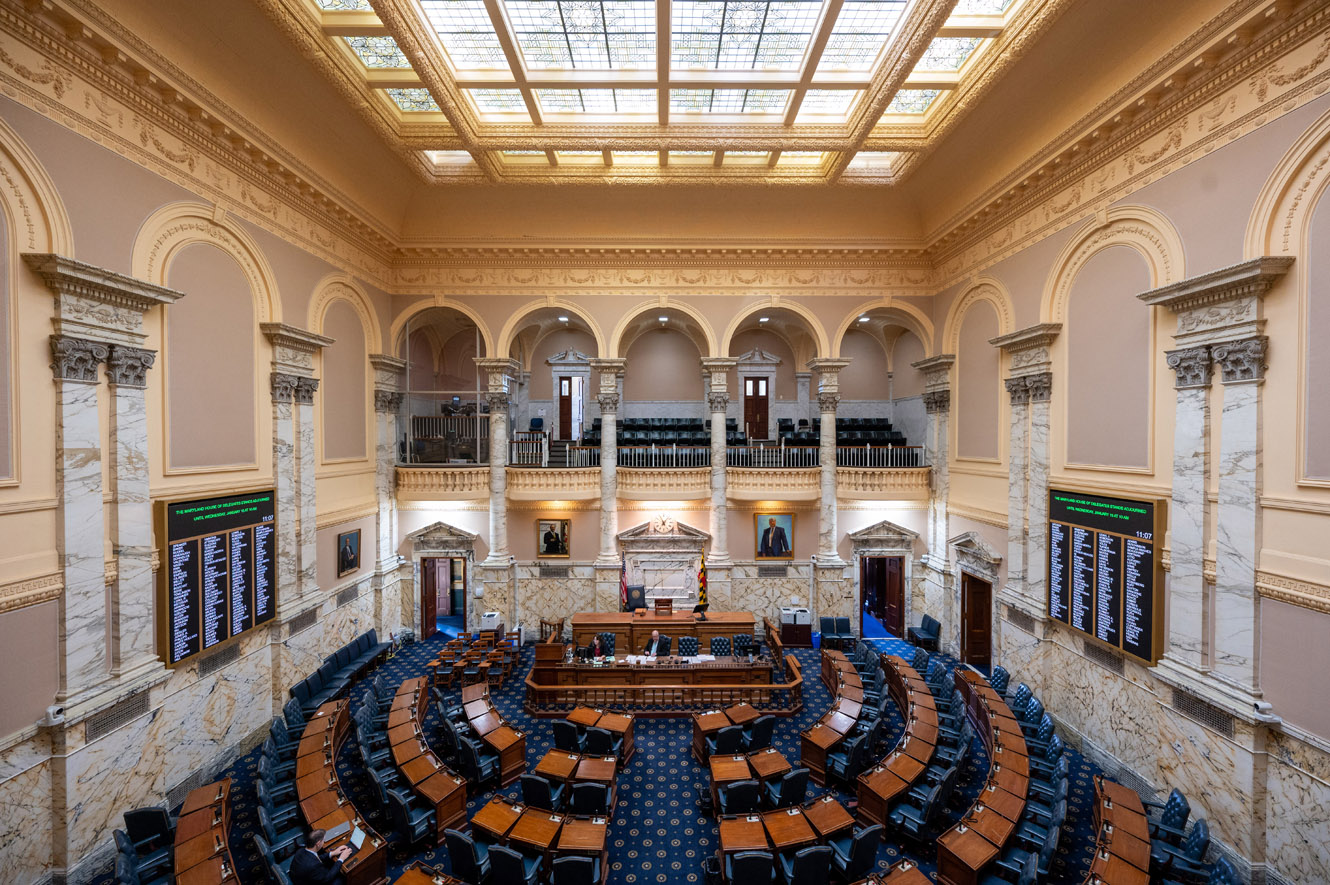
Her rise was not sudden. Before becoming a central figure in legislative leadership, Peña-Melnyk built a long and steady career, uncommon in an era dominated by fleeting leadership. She was first elected as a state delegate in 2006, representing District 21 in Prince George’s County, one of Maryland’s most diverse areas, where African American, Latino, and immigrant communities from multiple backgrounds coexist.

Since then, her presence in Annapolis has been uninterrupted. Unlike other leaders who rise through media confrontation, Peña-Melnyk consolidated her influence in the less visible but most decisive spaces of legislative power. Her specialization in technical areas, those that define the daily functioning of the state, allowed her to build a solid and cross-cutting reputation.
For years, she chaired the influential Health and Government Operations Committee, from which she oversaw public health policy, the functioning of state agencies, government procurement, and institutional regulation. That strategic role enabled her to master budgetary detail and the fine print of legislation, while also building internal alliances that proved key to her eventual election as Speaker.
In Maryland politics, where leadership is defined as much by votes as by internal trust, that technical and persistent profile was decisive. Her election was neither a symbolic gesture nor a stroke of luck. It was the logical outcome of nearly two decades of legislative work, constant negotiation, and the accumulation of political capital in an environment where power is earned with patience.
Peña-Melnyk’s designation marks several milestones simultaneously. She is the first immigrant to preside over the Maryland House of Delegates and the first Afro-Latina to hold the position. Organizations such as Voto Latino have also stated that she is the first Dominican American to lead a state legislative chamber in the United States, a claim celebrated by the Latino movement as a significant advance in national political representation.
Beyond the superlatives, the central fact is clear. A woman of Caribbean origin, formed outside the traditional Anglo-Saxon power elites, now leads an institution that defines multibillion-dollar budgets, social priorities, and the legislative direction of a state with substantial weight on the federal stage.
The context in which she assumes the presidency is not insignificant. Maryland faces complex debates over housing, access to health care, education funding, immigration, and social justice, amid fiscal pressures and growing political polarization. As Speaker, Peña-Melnyk controls the legislative agenda, decides which bills move forward, and acts as a bridge between the state executive branch and the Democratic majority caucus.
For the Dominican and Latino community in the state, her ascent represents more than a ceremonial achievement. For years, Latino demographic growth did not always translate into real power within state structures. Her arrival at the presidency of the House breaks that barrier and sends a clear message about who can occupy decision-making spaces.
The challenge she now faces is twofold. To maintain internal cohesion within the House and advance an effective legislative agenda, while managing the expectations of communities that see in her figure a hope for structural change. Her trajectory shows that power is not always achieved through grandiose speeches, but through persistence, institutional knowledge, and a precise reading of political timing.
From Annapolis, the story of Joseline Peña-Melnyk now fits into a broader narrative. That of a community that, step by step, is beginning to occupy the spaces where the future is decided.