Much noise, zero documents. The origin of the rumor about an alleged U.S. veto of Paliza as foreign minister
New York. – For several days, a rumor has gained traction across social media and digital spaces within Dominican politics. The version circulating claims that the United States would have expressed its opposition to José Ignacio Paliza assuming the Foreign Ministry. There are no documents. There are no statements. There are no identifiable official sources; however, the claim has been repeated with enough insistence to warrant a responsible review of the facts.

The starting point is simple. To date, there is not a single public statement, neither from the Dominican government nor from the U.S. government, indicating that Washington has vetoed, blocked, or conditioned a potential appointment of Paliza as minister of Foreign Affairs. There are also no pronouncements from the State Department, no verifiable diplomatic leaks, and no reports from leading international media outlets supporting that version.

From an institutional standpoint, the hypothesis presents a first structural weakness. The appointment of a foreign minister is an exclusive prerogative of the Dominican Executive Branch. It does not require external approval. It is not subject to validation by allied governments. A formal veto by a third State would not only lack legal basis, but would directly contradict basic principles of international law and contemporary diplomatic practice.
-
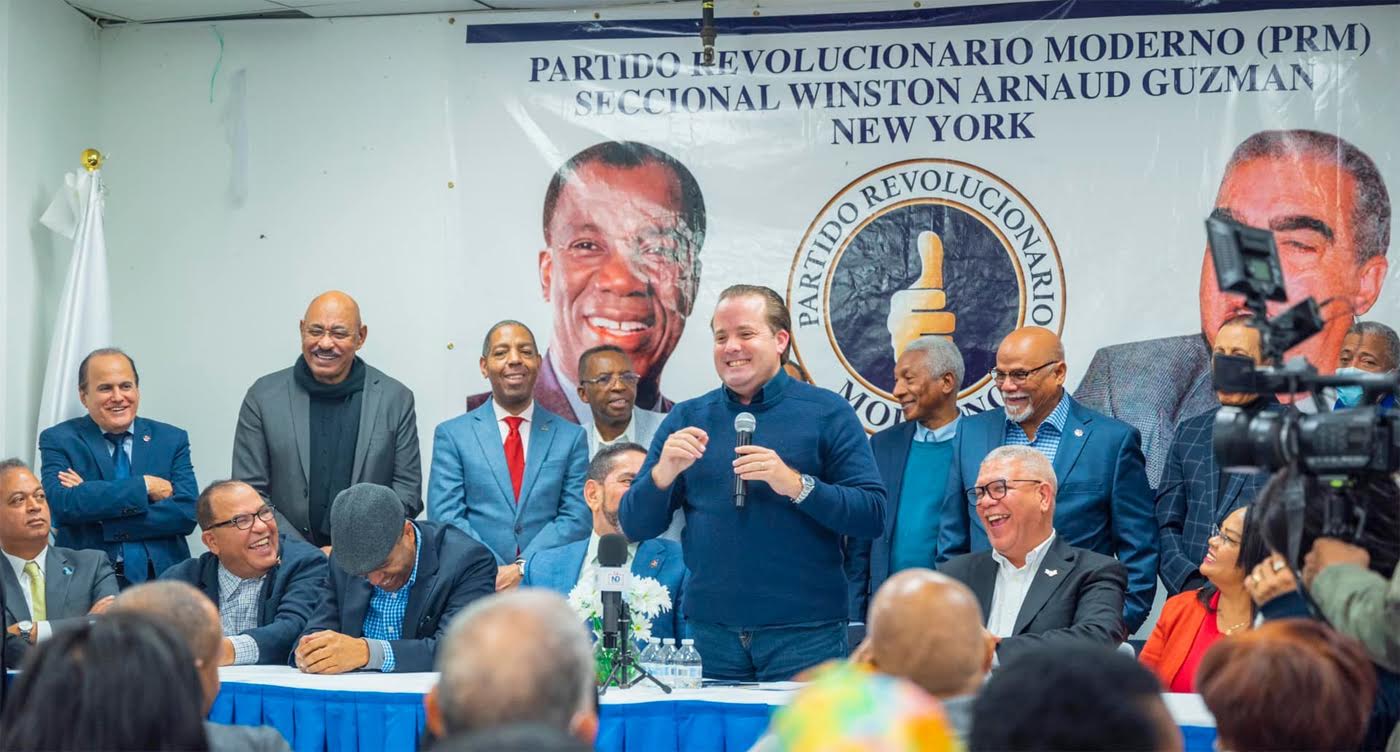
- José Ignacio Paliza, actual presidente del Partido Revolucionario Moderno (PRM), durante un acto de campaña en Nueva York.
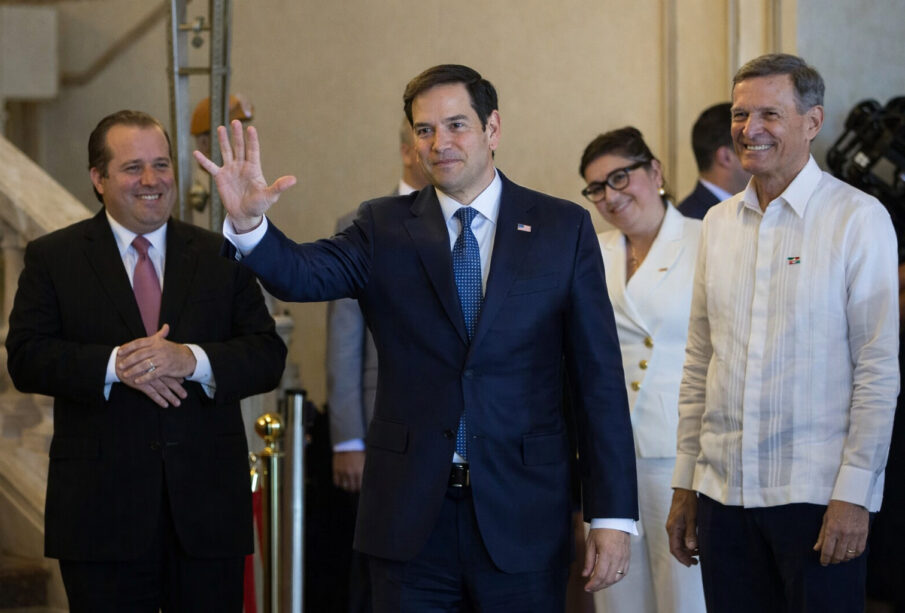
Recent context also fails to reinforce the conflict narrative. During the official visit of Marco Rubio, U.S. Secretary of State, to Santo Domingo, Paliza participated in protocol events at the National Palace alongside the acting foreign minister. The agenda included prior meetings with embassy staff, a meeting at the Ministry of Foreign Affairs, and later an exchange with the Dominican president at the seat of the Executive Branch; the images released show a normal institutional setting, with no visible signs of tension, discomfort, or political distancing.

An operational detail often overlooked in the digital discussion adds further context. Paliza maintains frequent travel to the United States, both for party-related activities and in his role as a government official. Those trips have been public and show no known restrictions.
In diplomatic practice, when a serious, sustained, high-level conflict exists, one of the first signals is usually a limitation of territorial access. There is no public evidence that Paliza’s visa has been revoked.
-
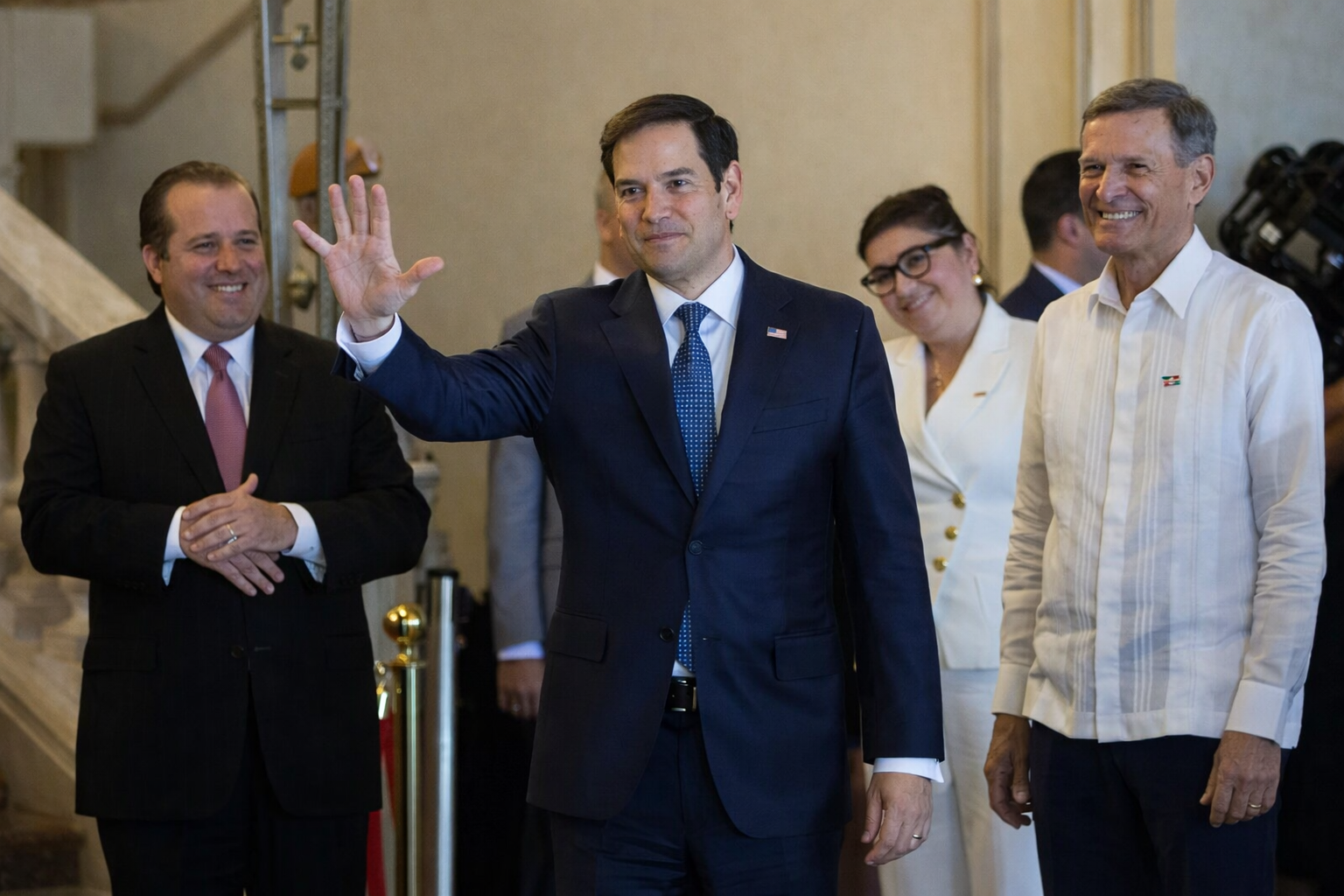
- Marco Rubio, secretario de Estado de Estados Unidos, saluda a su llegada al Palacio Nacional de Santo Domingo, acompañado por José Ignacio Paliza y el canciller dominicano Roberto Álvarez, durante una visita oficial en la que se abordaron temas de la agenda bilateral entre ambos países.
This does not mean that the absence of migration-related measures constitutes definitive proof of absolute harmony. U.S. visa policy operates with broad discretionary margins and, in many cases, without public explanations. But the observable fact is clear. There are no verifiable indications of a frontal clash that would support the thesis of categorical opposition.
This leads to the central question. If a real and substantive objection existed, what would be its source. In reasonable terms, there are only two possibilities. A reliable leak from the U.S. diplomatic apparatus, or an internal communication from within the Dominican government with real access to such information. So far, neither avenue has produced evidence.
The origin of the rumor can be traced to commentators, social media accounts, and opinion spaces that assert the existence of a veto without presenting documents, without citing official sources, and without independent corroboration. This pattern is common in scenarios of internal political dispute, where narrative precedes facts and suspicion is presented as data.
In real diplomacy, allied States may express preferences, discomforts, or reservations privately. This occurs frequently and is part of the exchange between governments. But such informal signals do not constitute vetoes, are not binding, and do not determine sovereign decisions; turning those dynamics into a formal prohibition is an extrapolation that distorts the public debate and undermines its credibility.
With the information available, the picture is consistent. The United States does not have the authority to veto the appointment of a Dominican foreign minister. There is no public evidence of a formal objection against José Ignacio Paliza. His recent activity and institutional exposure contradict the idea of a serious rupture. And the rumor does not originate from official sources, but from circuits of digital speculation.
In an environment marked by virality and polarization, journalism has a clear function. Not to amplify unsupported versions, but to establish limits, context, and a hierarchy of facts. Until documents, official statements, or credible reports emerge indicating otherwise, presenting a supposed U.S. veto as fact is, quite simply, incorrect. Everything else belongs, for now, to the realm of conjecture and speculation.