
New Book by Esteban Cabrera Reveals the Price of Being Black in Private Prisons
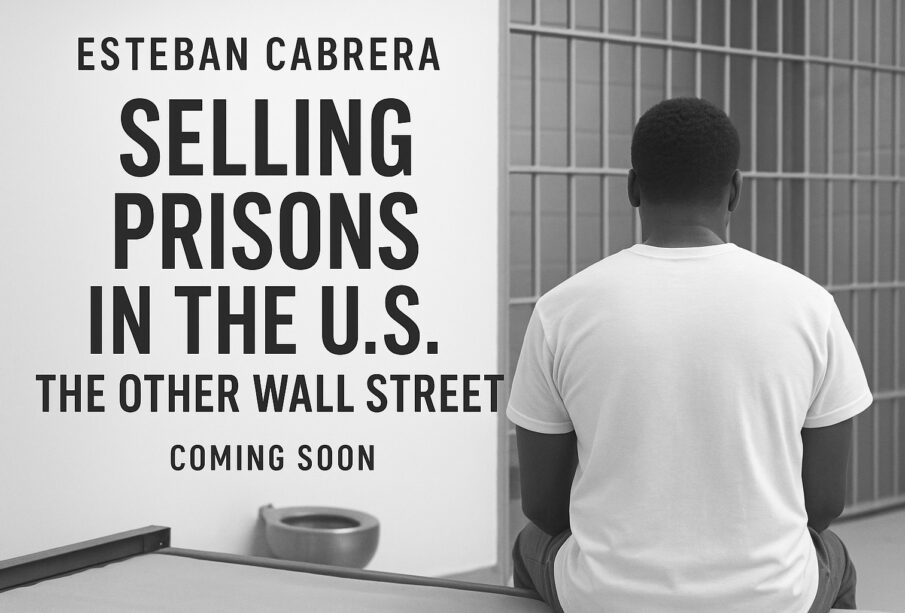
New York: “Prison Sales in the U.S.: The Other Wall Street” is more than a provocative title—it’s a well-documented, gut-wrenching, and necessary exposé. In one of its most powerful chapters, journalist and author Esteban Cabrera lays bare what it truly means to be Black in a privatized prison system built on incarceration, poverty, and structural racism.
Titled “The Price of Being Black in Private Prisons,” the chapter reveals how prison privatization has turned African Americans into the primary targets of a system designed not to rehabilitate, but to maximize profit. Although Black Americans make up only 13% of the U.S. population, they have comprised between 38% and 45% of the private prison population since the 1980s. “This is no coincidence—it is the deliberate result of policies that reward mass incarceration and the criminalization of Blackness,” the book states.

Cabrera backs this claim with verifiable data. Over 5 million Black men have been incarcerated between 1980 and 2025, and 1 in 9 Black children has had a parent behind bars. Yet the punishment doesn’t end with a prison sentence—it continues through the loss of voting rights, bans from formal employment, exclusion from housing programs, and disqualification from educational scholarships. “Leaving prison is not freedom,” the author writes. “It’s carrying an invisible life sentence.”
The book also exposes the labor exploitation inside private prisons, where thousands of African Americans work for $0.23 to $1.15 per hour, with no labor rights or union protections. “A modern form of slavery legalized by the 13th Amendment,” Cabrera notes, citing organizations like the ACLU. Corporations such as AT&T, McDonald’s, Whole Foods, Victoria’s Secret, and Boeing, among others, have directly or indirectly benefited from this system of exploitation disguised as justice.

Through official reports, powerful testimonies, and hard data, Cabrera shows how incarceration kills, both physically and mentally. More than 1,500 Black Americans have died in private custody between 2000 and 2020, often due to medical neglect or ignored violence. The psychological damage goes far beyond prison walls, extending through surveillance technologies like GPS ankle monitors, which impose new forms of control and financial burden.
This chapter not only exposes a disturbing reality, but it also dismantles a business model built on human suffering, where recidivism becomes a profitable cycle. Private prisons don’t rehabilitate—they recycle. And Black Americans are their prime targets.
“Prison Sales in the U.S.: The Other Wall Street” is a timely and urgent book. It is essential reading for anyone who still believes the justice system treats everyone equally. With journalistic rigor, hard-hitting evidence, and a clear voice, Esteban Cabrera reminds us that in the United States, being Black still comes at a cost—and in the business of private incarceration, that cost is far too high.
Coming soon.
Available in bookstores and digital platforms.
A must-read to understand how injustice is legalized in the 21st century.
For more information: [email protected]/Tel: 267-881-2008.
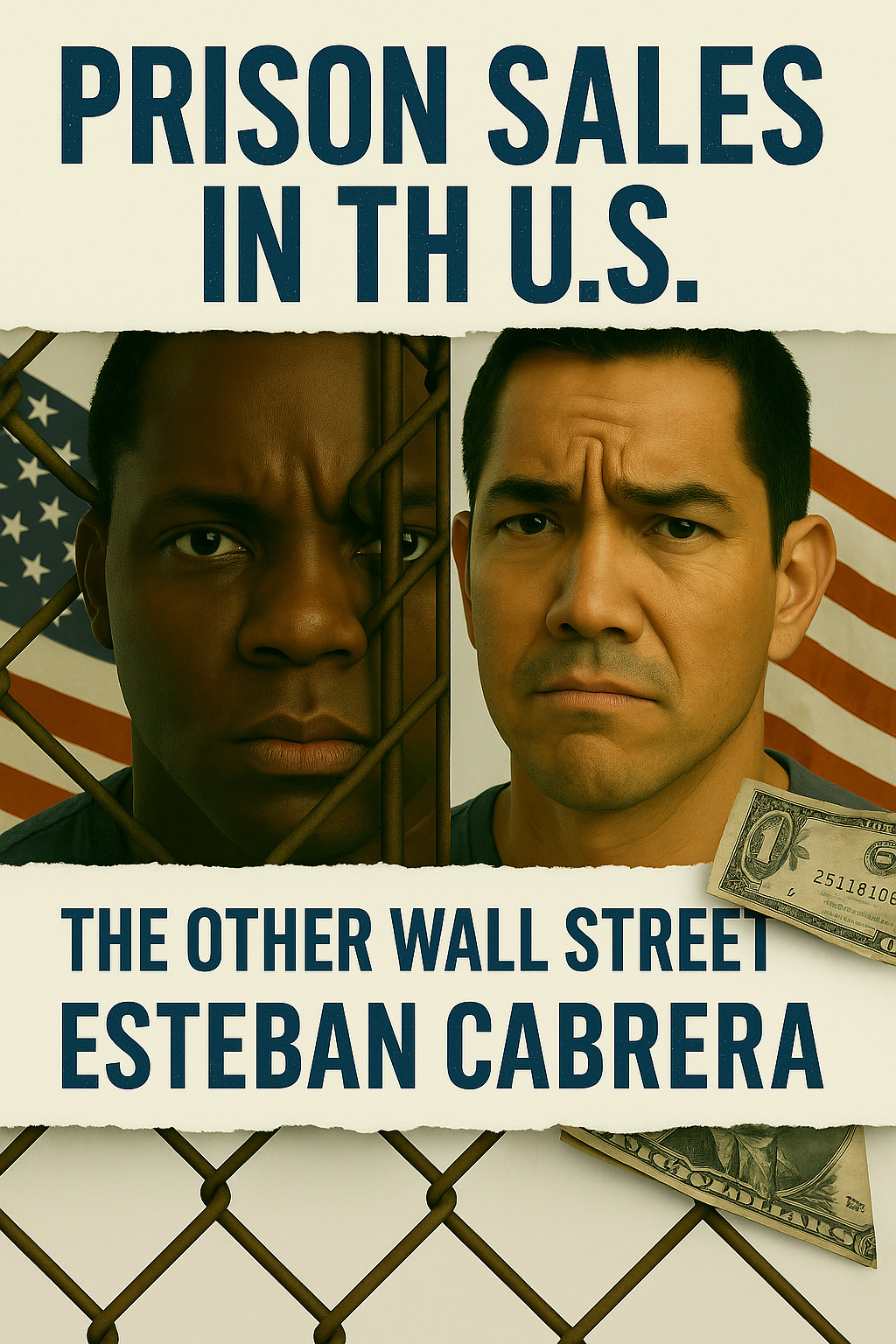
- Book cover