
The Whole Truth About SeNaSa and President Abinader’s Stance
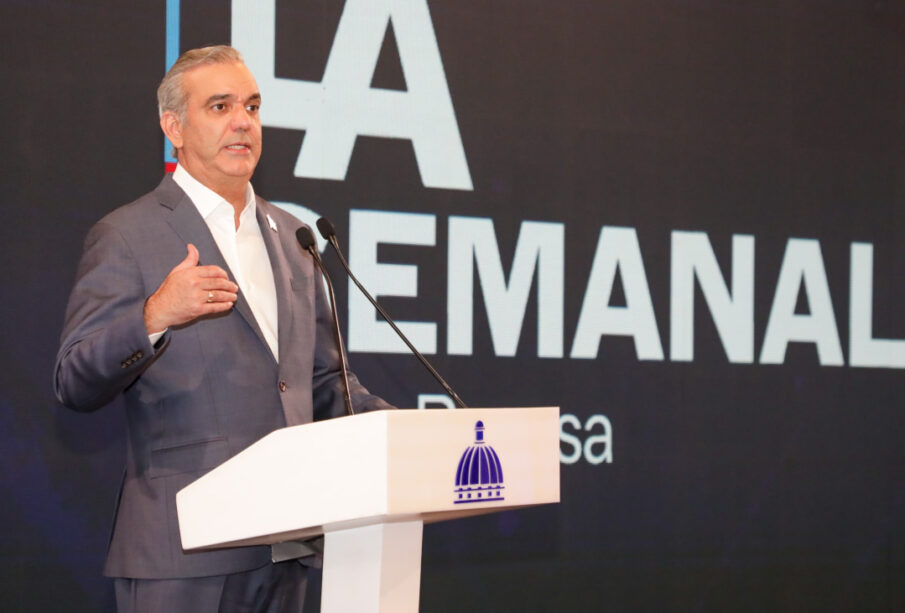
New York: Amid the noise and misinformation, journalism’s first duty is to separate fact from opinion. In the SeNaSa case, the verified facts are clear. On August 17, 2025, President Luis Abinader replaced Santiago Hazim and appointed Edward Rafael Guzmán Padilla as the new director, as per Decree 461-25. This was no cosmetic gesture; it took place against a backdrop of reported deficits and concerns about the agency’s governance.

The president ordered that a technical report with findings of irregularities be sent to the Attorney General’s Office. He reinforced that decision with an unequivocal message to his officials, “I can have friends, but never accomplices.” There is no ambiguity here, only institutional traceability and accountability to the Public Ministry.

SeNaSa commissioned a comprehensive audit covering 2018–2024, 27 departments, and a 25-week schedule. Like any public policy, this decision can be improved, but it represents the minimum standard for transparency, distinguishing administrative errors from potential crimes and, above all, protecting the subsidized insurance program.
Despite these facts, statements and quotations attributed to the former SeNaSa director have circulated without documentary support or publication in reputable outlets. Ethics demand clarity: an extraordinary claim requires extraordinary evidence. Without a verifiable record, video, official transcript, or credible journalistic report, such material remains uncorroborated.

What is documented is that the Specialized Prosecutor’s Office requested from journalist Nuria Piera the relevant broadcasts to support its inquiries, precisely how a state committed to evidence-based investigation should proceed.
This article, therefore, issues a corrective: after investigation, there is no solid basis for turning rumors into conclusions about supposed “messages” or warnings attributed to third parties. Converting social-media chatter into a legal dossier is a dangerous shortcut. Honesty and professionalism require focusing on what is provable: the leadership change at SeNaSa, the submission of the report to the Attorney General, and the ongoing audit. Everything else is noise.
Defending the president’s position here is not an act of faith but of method. Replacing the incumbent, forwarding findings to prosecutors, and initiating audits are consistent with the pledge not to tolerate impunity “no matter how close the friend.” Public discourse should weigh these facts before succumbing to narratives convenient to those who, from openly partisan media trenches, prefer to sow suspicion without submitting to the discipline of evidence.
Note to Colleagues and Readers
The best vaccine against misinformation is a simple verification protocol. First, confirm with primary sources, decrees, official statements, and filings with the Attorney General. Second, cross-check with media outlets that maintain recognized editorial standards. Third, clearly distinguish between investigative reporting and judicial proof: the former raises questions, while the latter answers them. Fourth, demand that every accusation include a date, document, and responsible party, not just a viral phrase without an identifiable author.
With SeNaSa under scrutiny, the public deserves fewer slogans and more data. Suppose we truly care about the integrity of the health system and the protection of the most vulnerable. In that case, the path is not agitation through de-contextualized clips but rigorous follow-up of the process: a published audit, possible indictments if warranted, and parallel reforms to prevent proven, not invented, irregularities from recurring. That is the ground on which this debate must unfold, and so far, it is exactly where the Executive Branch has chosen to place it.
Discrediting biased information is not silencing criticism; it is demanding that criticism be honest. A political agenda is legitimate when acknowledged as such. What is not legitimate is dressing a slogan as a “fact.” In a democracy, a well-founded rebuttal is itself a public service.