
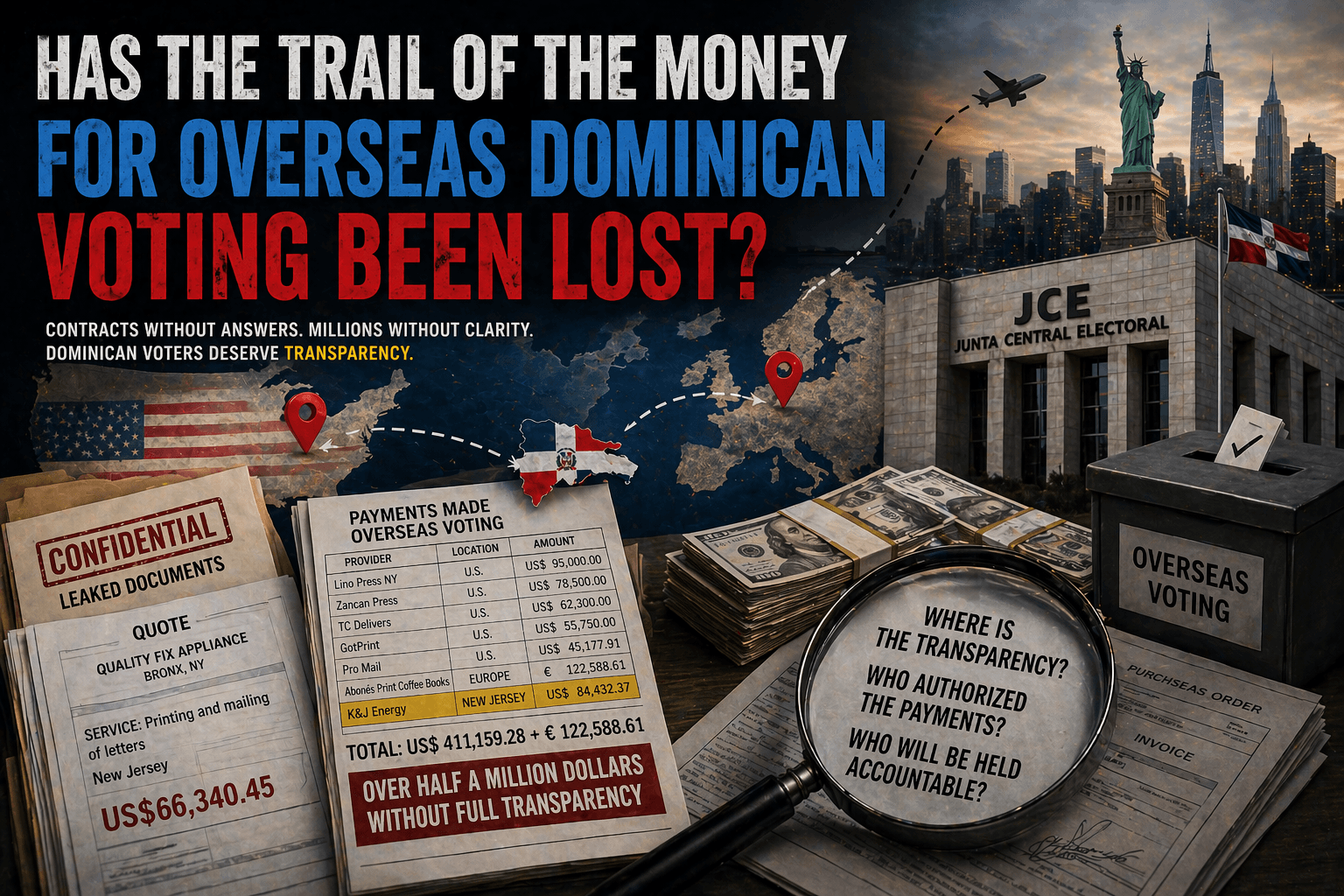
New York — The alert began with a leak. In mid-April 2024, a highly credible internal source provided El Faro Latino with a series of documents pointing to a possible irregular contract for mailing letters to Dominican voters in the United States.
The document was a quotation issued by a company called Quality Fix Appliance, based in the Bronx, with a proposed budget of $66,340.45 for the state of New Jersey. The company’s business name did not align with printing or postal distribution services, and the listed address did not correspond to any known entity in the graphic or mailing sector. This marked the beginning of an investigation that gradually uncovered a broader pattern of inconsistencies that the Junta Central Electoral has yet to explain.
Receive breaking news alerts
Immigration, New York, Dominican Republic and investigative news delivered directly to your phone and computer.

Free — unsubscribe anytime.
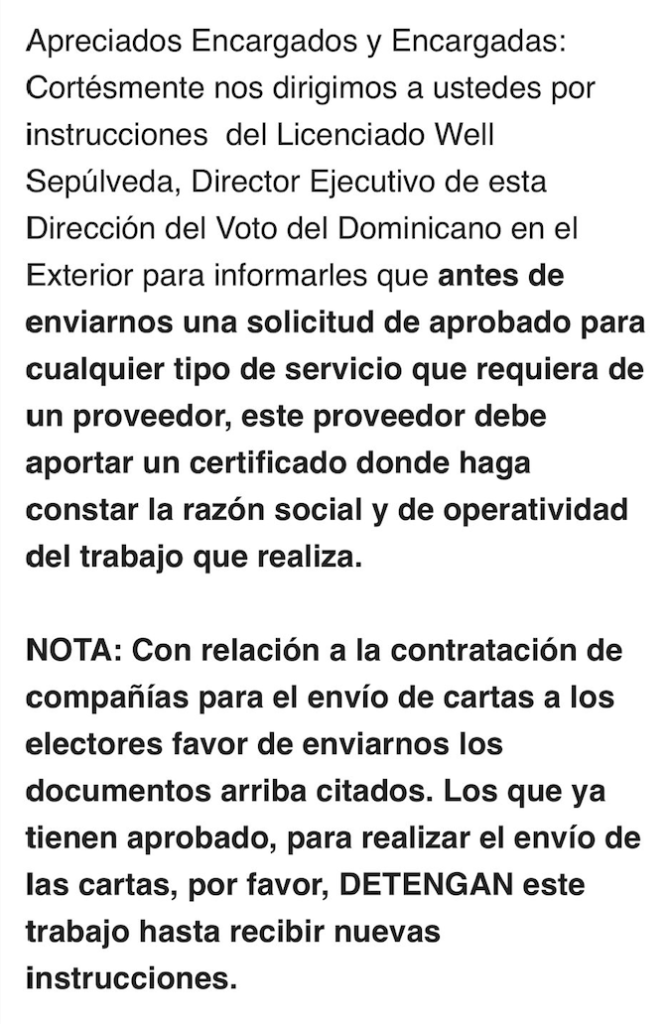
The leak did not come alone. Alongside the quotation were internal communications showing that the Overseas Dominican Voting Department, led by Well Sepúlveda, issued an urgent directive ordering a halt to contracting and requiring verification of legal status and operational capacity for any company involved in voter correspondence.
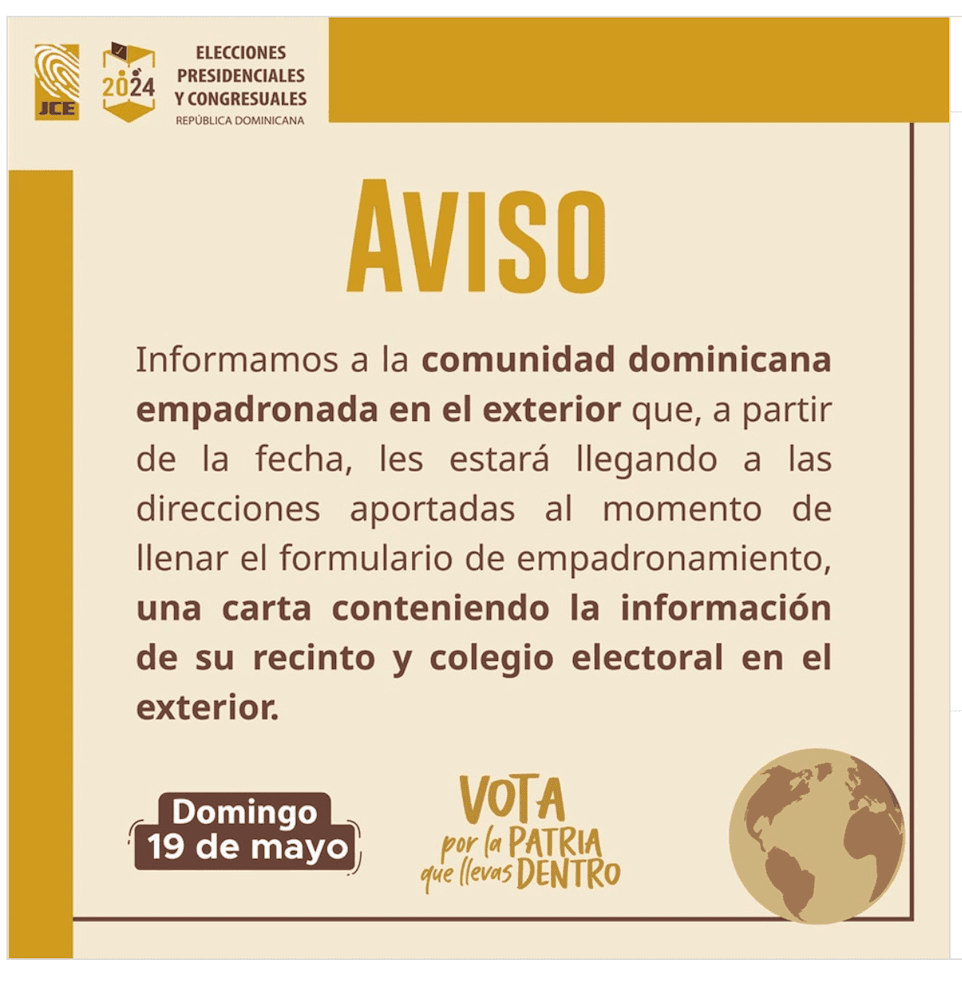
However, within days, a contradiction became evident. While the internal directive called for a suspension, the JCE publicly announced through its social media channels that the letters were in fact being sent. No explanation was provided regarding what occurred between those two opposing actions.
When El Faro Latino formally requested all contracts, amounts, and the names of the companies involved through the Unified Portal for Access to Public Information (SAIP-SIP-97356), the Junta Central Electoral did not provide the documents. That refusal led to a legal process that is still in the notification stage. The Tribunal Superior Administrativoissued a ruling ordering the JCE to deliver all financial information related to overseas voting, but at the time of this report, that judicial decision has not yet been enforced. It remains to be seen whether the institution will comply with the ruling or attempt to challenge it.
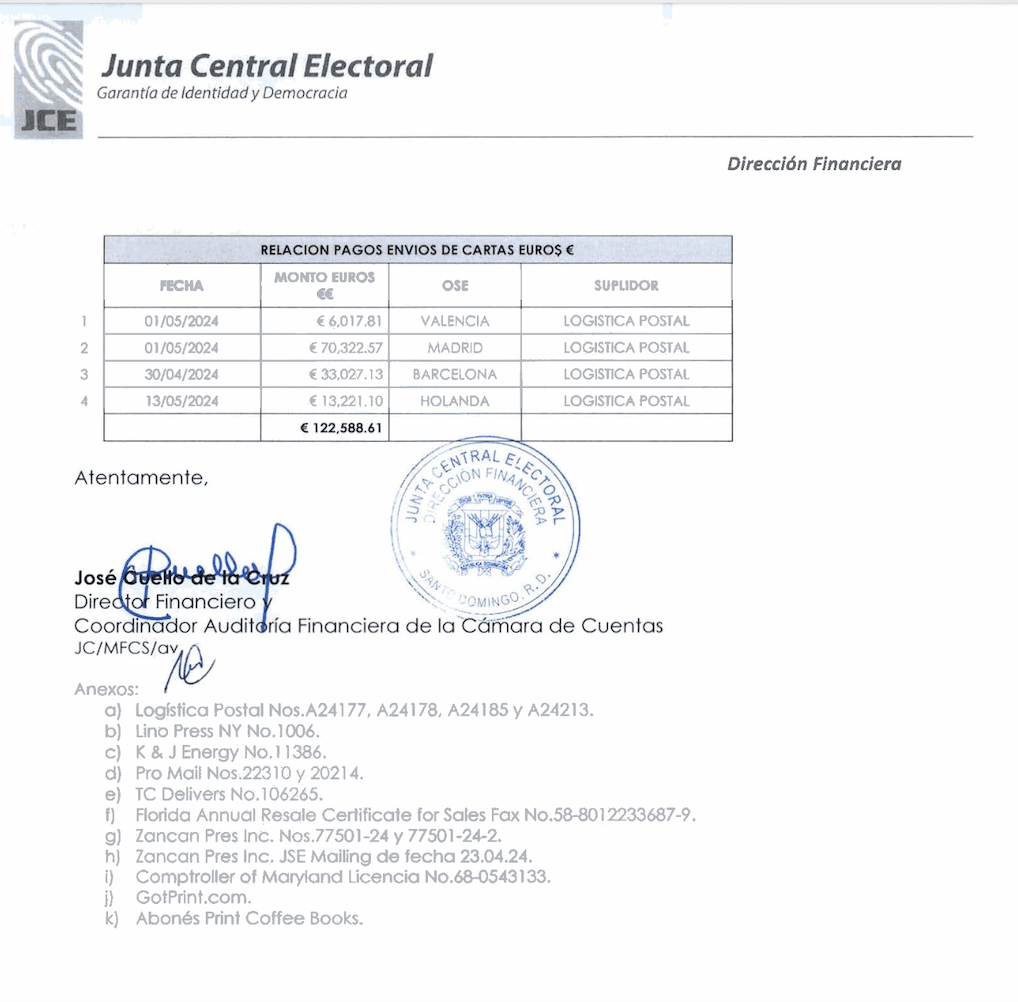
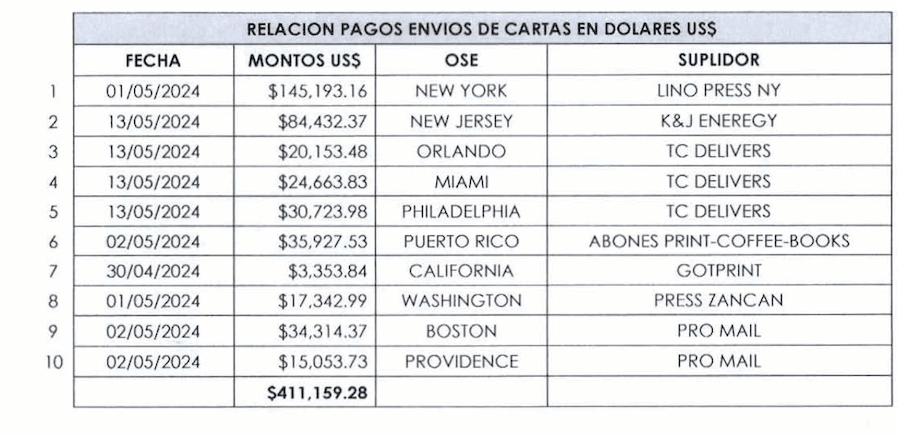
The story does not end there. The quotation from Quality Fix Appliance does not appear among the official vendors in the records later disclosed by the JCE. Instead, a payment table emerged showing disbursements of $411,159.28 in the United States and €122,588.61 in Europe, bringing total spending to over half a million dollars.
Among those companies are legitimate providers in the printing and mailing sector, including Lino Press NY, Zancan Press, TC Delivers, GotPrint, Pro Mail, and Abonés Print Coffee Books. All of them, based on independent verification, exist and operate within the printing, bulk mailing, or graphic services sector, at least within their respective jurisdictions.
However, one name stood out: K&J Energy, contracted in the state of New Jersey for an amount of $84,432.37. Its business profile does not correspond to printing, bulk mailing, or graphic services. It is a firm linked to the energy sector, with no known connection to any printing, packaging, or correspondence distribution processes.
The presence of K&J Energy in the official table raised further questions, particularly because it was the same state where the leaked quotation from Quality Fix Appliance had surfaced. El Faro Latino found no public documentation confirming that K&J Energy has the technical capacity or commercial licensing required to carry out an electoral printing and mailing service of that scale.
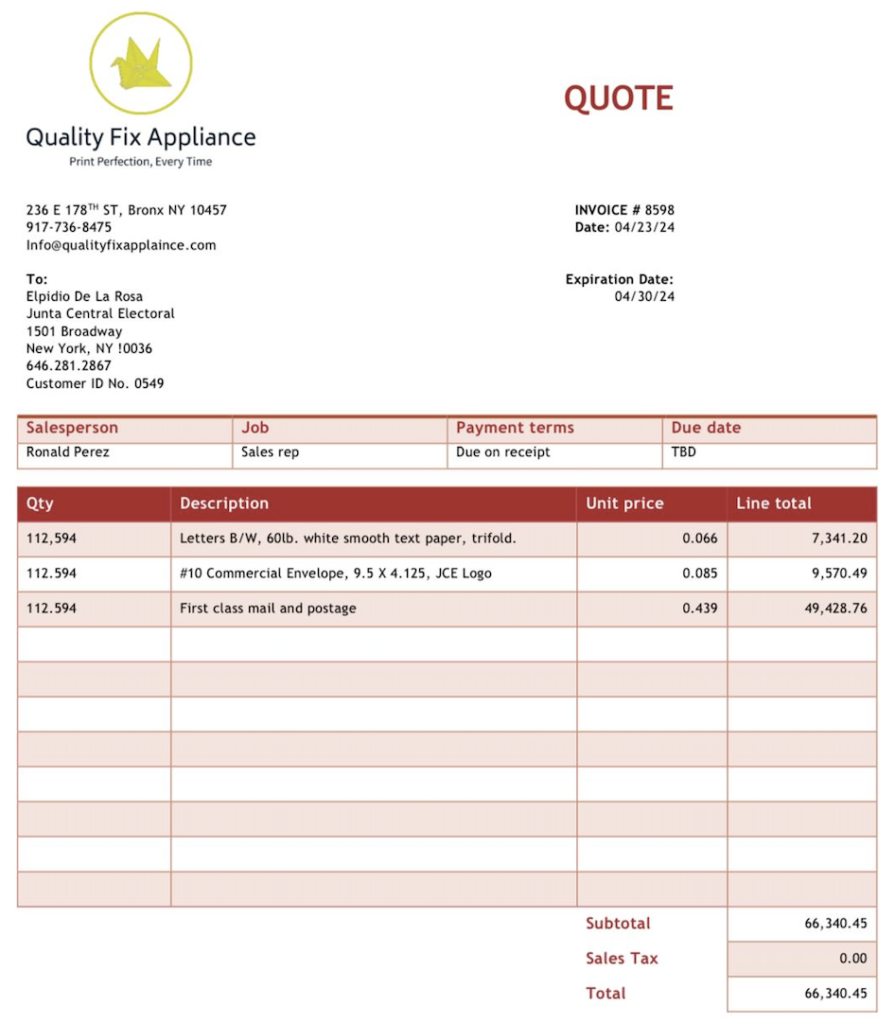
Unlike that case, another provider did respond clearly. In a phone call with El Faro Latino, Franklin, a representative of Lino Press NY, personally confirmed that his company received a contract from the Junta Central Electoral and that it effectively carried out the assigned service. His response helped validate one of the names listed in the official vendor table. However, the confirmation of one supplier does not resolve the broader questions: how the others were selected, what formal processes were followed, who authorized the disbursements, and what role the so-called phantom quotation from the Bronx-based company actually played.
The pattern of contradictions is particularly concerning because this would not be the first time irregularities have emerged in the management of the overseas electoral budget. During the 2020 elections, although the JCE did not provide all requested information at the time, several internal leaks allowed El Faro Latino to estimate that, out of a total overseas voting budget of $7,179,625.20, more than $4,618,696.76 may have been misused, according to a forensic audit conducted by the private auditing firm Disla Doñé & Asociados.
That investigation concluded, based on documented evidence, that the management of overseas funds followed a spending structure lacking controls, justification, and marked by multiple irregularities. This recent history therefore calls for heightened scrutiny of any inconsistencies in the 2024 process.
At present, the situation raises more questions than answers. The JCE has published a list of companies that allegedly provided services and the amounts disbursed, but it has not explained why it ordered a halt to contracting while simultaneously proceeding with payments abroad. Nor has it clarified why a phantom vendor appeared in the leaked documentation. Additionally, it has not provided contracts, certifications, purchase orders, invoices, shipping records, or execution reports that would allow verification of whether the contracted companies—especially those outside the graphic services sector, such as K&J Energy—actually performed the billed services.
La sentencia del Tribunal Superior Administrativo podría obligar a la JCE a entregar cada documento financiero vinculado al voto del exterior. Eso incluye los statements bancarios de las cuentas abiertas para la JCE por el Ministerio de Relaciones Exteriores de Republica Dominicana (MIREX) en el exterior, también los contratos y la trazabilidad completa del gasto, con detalles sobre quién solicitó, quién aprobó, qué se pagó, a quién se pagó y qué evidencias existen de que el servicio se realizó. Hasta que eso ocurra, la investigación seguirá abierta.
Las filtraciones, las contradicciones internas, el proveedor fantasma y la presencia de empresas cuyo giro comercial no guarda relación con servicios de impresión y mailing son elementos suficientes para encender todas las alarmas. La diáspora dominicana merece saber cómo se manejó cada dólar del presupuesto electoral y por qué una estructura de gasto tan sensible continúa envuelta en opacidad. El Faro Latino dará seguimiento hasta que la verdad documentada salga a la luz, no por conflicto institucional, sino por derecho ciudadano y por la integridad del proceso democrático.

Comments (0)
Be the first to join the conversation.