
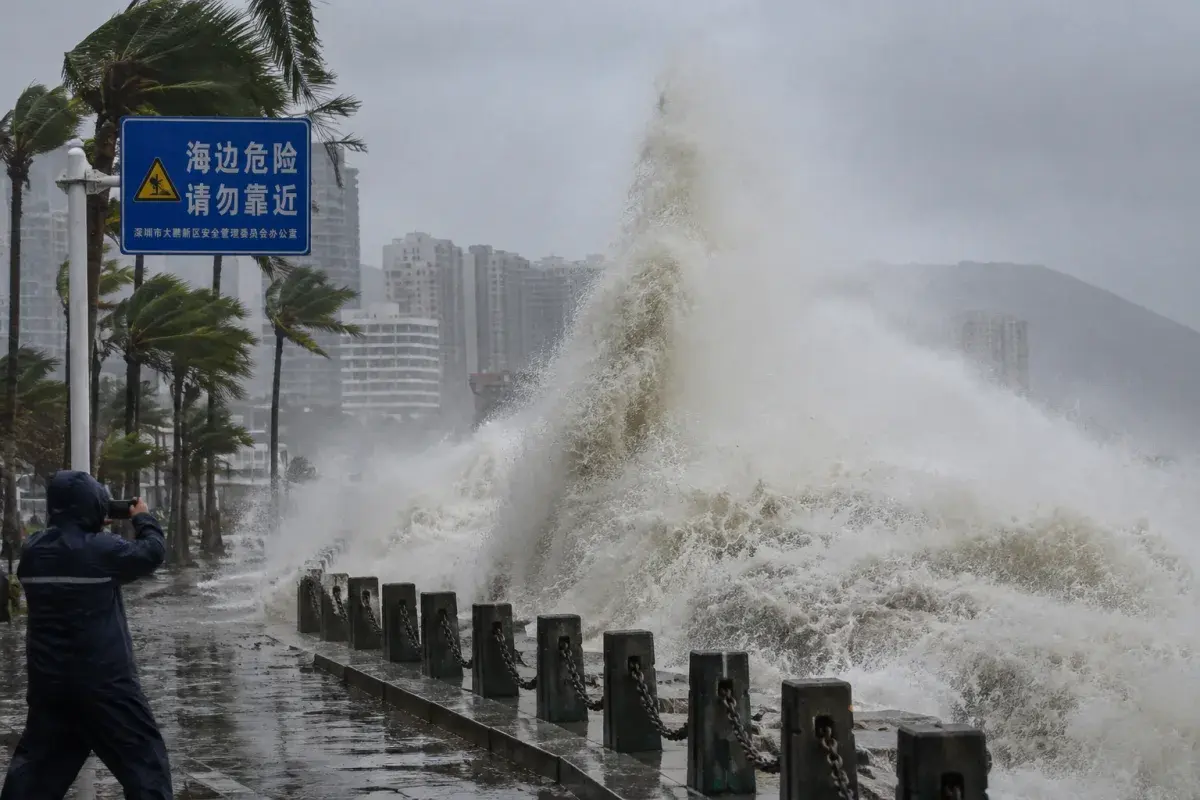

BEIJING.— More than one million people were forced to leave their homes as Typhoon Dolphin swept across China’s eastern coast on Sunday, bringing powerful winds and torrential rain while cities braced for flooding and landslides.
Dolphin made landfall near Yuhuan, in Zhejiang province, with sustained winds of about 94 miles per hour. The storm became the strongest tropical cyclone to strike China so far this year, putting an extensive emergency operation into motion across vulnerable coastal communities.
Receive breaking news alerts
Immigration, New York, Dominican Republic and investigative news delivered directly to your phone and computer.

Free — unsubscribe anytime.
The scale of the evacuations offered a glimpse of the threat authorities were preparing for. In Wenzhou alone, more than 900,000 people were moved to safer locations as communities along the coast suspended activities and prepared for intense rainfall.
Shanghai, one of China’s largest cities and a major global economic center, also felt the disruption. Around 1,500 flights were canceled, while authorities opened more than 1,000 emergency shelters. Ferry services, maritime operations and other coastal activities were suspended in areas exposed to the storm.
But Dolphin’s arrival on land did not mean the danger was over.
As the typhoon moved inland and began losing strength, heavy rainfall remained a serious concern. Authorities warned of possible flooding, swollen rivers, mountain torrents and landslides across Zhejiang and other parts of eastern China.
Before reaching China, Dolphin had already struck Okinawa, Japan, where at least six people were injured. Power disruptions also affected tens of thousands of buildings as the storm moved through the region.
Chinese authorities raised the typhoon warning to red on Sunday, the highest level in the country’s alert system. Fishing vessels were ordered back to port, maritime services were suspended and precautions were taken across areas expected to face the worst conditions.
Now, as the massive weather system continues moving inland, attention is shifting from the winds to the water it may leave behind.
For more than a million people who temporarily left their homes, Dolphin will not truly be over when it disappears from the weather map. It will end when they are able to return and see what the storm left behind.

Comments (0)
Be the first to join the conversation.