
Harrisburg, PA.- Dave Sunday, the Republican candidate who won the election for Pennsylvania Attorney General in November 2024, took office on January 21, 2025. He did not receive a small or symbolic office; he inherited the state’s principal law-enforcement institution, made up of hundreds of prosecutors, investigators, agents, and support personnel, organized into four divisions with authority over drug trafficking, organized crime, public corruption, Medicaid fraud, consumer protection, and crimes against vulnerable people.
What Sunday is doing does not simply consist of announcing arrests. His administration seeks to turn the Attorney General’s Office into a permanent coordination platform among local police, district attorneys, state agencies, and federal authorities.
Receive breaking news alerts
Immigration, New York, Dominican Republic and investigative news delivered directly to your phone and computer.

Free — unsubscribe anytime.
The available evidence shows a primarily operational transformation: more specialization, more coordination, and a greater concentration of resources on criminal networks that cross counties and jurisdictions.
A Plan for Expansion Presented from the First Month
Just five weeks after taking office, Sunday presented his budget request for fiscal year 2025–2026 before the House of Representatives.
The Attorney General’s Office requested $174.4 million, an increase of $30.5 million, equivalent to 21.2% over the previous level. The budget document itself reveals an important fact: more than 88% of the increase corresponded to salaries and benefits for existing personnel. Only slightly more than 6% was allocated to nine new positions. This reflects a decisive valuation of human resources and an unequivocal emphasis on professional motivation.
Those positions included deputy attorneys general for Medicaid fraud, appeals, operations, and the executive office; agents for labor fraud and compliance; analysts for Medicaid, litigation, and organized retail theft; a civil investigator; and support personnel for the criminal prosecution section.
The request shows that Sunday identified an institutional problem upon arriving in office: the Attorney General’s Office was receiving more and more referrals from district attorneys and state agencies, but its staff had not increased proportionally. In 2024, the office reported handling 582 referrals, an increase of 10% over the previous year, without additional personnel.
The budget proposal was therefore more than a request for money. It was a declaration of priorities ranging from strengthening the areas that investigate drugs, weapons, public fraud, organized retail theft, and consumer protection.
It must be clarified that this was a budget request. The document proves what the administration requested and justified, but it does not by itself demonstrate that all the positions were approved or filled.
Sunday’s Model, the Attorney General’s Office as a Coordination Center
In his inaugural address, Sunday defined collaboration as the organizing principle of his administration. His model connects the Attorney General’s Office with municipal police, district attorneys, medical centers, community organizations, mental-health agencies, private companies, and federal authorities.
That approach responds to the current nature of crime. Drug networks do not respect municipal boundaries. Fraud involving consumers’ cards and accounts crosses several counties. Illegal weapons can be purchased in one region and end up in another. Medicaid fraud involves providers, caregivers, pharmacies, and managing companies.
The office already had collaborative structures before Sunday. The Attorney General’s Office notes, for example, that its gun-violence groups date back to 2007 in Philadelphia and that the joint task force in Allegheny County began operating in 2024.
Nor was Sunday the person who created the LETI program, which began in 2018, or the Organized Retail Crime Unit, created in 2024. The difference is that Sunday inherited those structures and turned them into visible pieces of his strategy.
A New Executive Leadership
Sunday also reorganized his command team.
Kyle King, who came from the York County District Attorney’s Office, became chief of staff. Kara Bowser, who had worked with Sunday in York and had led homicide cases, later became First Deputy Attorney General.
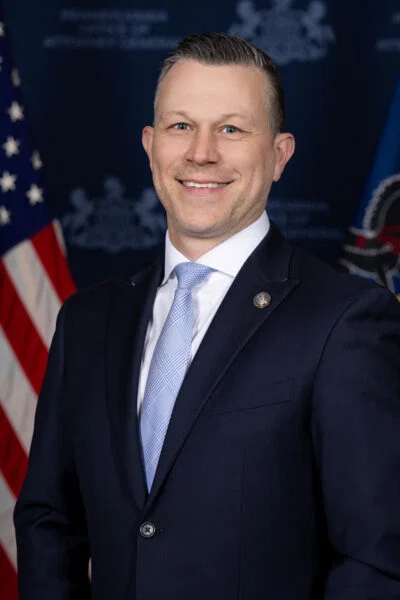
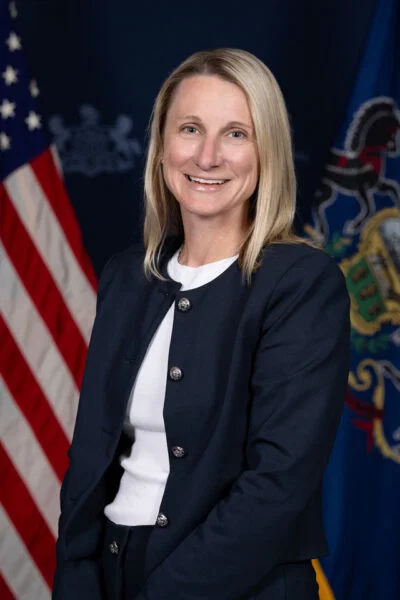
The most significant change occurred in July 2025, when James Donahue retired after four decades at the Attorney General’s Office. Donahue had directed much of the historic work involving consumer protection, antitrust litigation, and agreements related to tobacco and opioids.
Sunday appointed Bowser to replace him. The move combined institutional continuity with a new direction that explains how the first deputy became a prosecutor with direct experience in homicides, violent crimes, and criminal prosecution.
The administration also appointed Ronald Eisenberg as executive director of the Civil Division and Ben Wren as deputy chief of staff. Wren also assumed oversight of communications, government affairs, and public engagement.
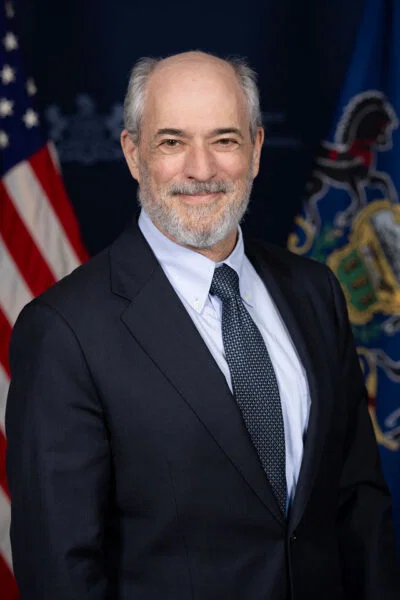
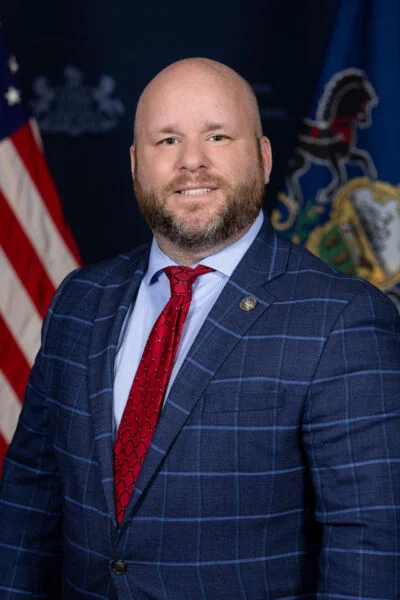
These appointments do not, by themselves, constitute a structural reform, but they do show the formation of a team close to the Attorney General, with experience in district attorneys’ offices, litigation, legislative affairs, and public administration.
From Traditional Prosecution to Specialized Units
One of the most visible changes under the administration has been the creation or expansion of units focused on specific problems, such as the financial exploitation of older people.
In November 2025, the Attorney General’s Office created a specialized section on elder exploitation. Its mission includes investigating theft, deception, financial abuse, and manipulation by relatives, caregivers, guardians, and people with legal authority.
The decision responded to a change in the profile of the victims. During 2025, the office reported more than 4,000 complaints related to scams and losses exceeding $76 million. The main methods used were bank transfers, cryptocurrencies, phishing, and impersonation of public officials.
The new section has institutional value because it concentrates within one team crimes that previously could have been scattered among fraud, abuse, theft, and crimes against dependent people.
Organized Retail Crime
The Organized Retail Crime Unit was not created by Sunday, but during his administration it is reaching its first full year of operation.
In 2025, it reported more than 100 new investigations, charges against 60 people, and cases in 52 counties. According to the Attorney General’s Office, the unit has agents and attorneys dedicated to investigating coordinated thefts, credit-card fraud, return manipulation, customer accounts, and the resale of merchandise.
The important fact is not only the number of arrests. The unit functions as an intelligence center that connects apparently separate crimes, such as thefts at several stores, purchases made with compromised accounts, and merchandise resold online.
LETI and the Diversification of the Criminal Response
The expansion of the “Law Enforcement Treatment Initiative” (LETI). This program allows certain nonviolent offenders with addiction problems to be referred to treatment instead of immediately entering the criminal process.
In October 2025, Sunday expanded the program to include mental-health services. Columbia, Montour, Snyder, and Union were the first counties to implement the new model.
The initiative allowed police officers, prosecutors, probation offices, and mental-health authorities to refer people directly to treatment or case management. By then, the Attorney General’s Office reported more than 2,500 cumulative referrals.
Institutionally, this means that Sunday’s strategy is not limited to increasing arrests. The administration is attempting to distinguish between traffickers who fuel the market and nonviolent people trapped in addiction or mental-health crises.
An Attorney General’s Office with Statewide Reach and a National Presence
The administration of Attorney General Dave Sunday has also sought to raise Pennsylvania’s influence within national networks of attorneys general.
In December 2025, Sunday was elected regional chair of the National Association of Attorneys General for the Eastern Region, which includes Pennsylvania, New Jersey, New York, Connecticut, Delaware, Maine, Maryland, Massachusetts, New Hampshire, Rhode Island, Vermont, the District of Columbia, Puerto Rico, and the United States Virgin Islands. He also serves as co-chair of the organization’s Consumer Protection Committee.
That role allows him to coordinate coalitions involving drugs, artificial intelligence, digital scams, consumer protection, and crimes that cross state borders. It does not give him additional authority over other states, but it does expand Pennsylvania’s ability to participate in multistate investigations and agreements.
Dave Sunday Is Generating an Operational Transformation, Not a Total Break
The provisional conclusion is clear: Sunday did not create the machinery of the Attorney General’s Office from scratch. Many of its tools existed before his arrival.
The transformation lies in the way he is using them.
He concentrates resources on multistate and multicounty criminal networks; requests additional personnel in high-demand areas; expands specialized units; creates teams for emerging problems, such as the financial exploitation of older people; incorporates mental health into the law-enforcement response through LETI; uses the Attorney General’s Office as a link among local, state, and federal authorities; and seeks a greater national presence through coalitions of attorneys general.
The claim that this is a “historic” administration still requires a broader comparison with previous administrations. The Attorney General’s Office publishes important results, but many figures are self-reported and combine inherited cases with investigations initiated under Sunday.
It is also necessary to distinguish between the budget requested and the budget approved; charges and convictions; restitution ordered and money actually collected; investigations opened and a demonstrated reduction in crime; and units created by Sunday and units he inherited.
Even with those reservations, the institutional pattern is evident. Sunday is building an Attorney General’s Office that is less dependent on the limits of each county and more organized around specialized units, shared intelligence, and joint operations.
The second report in this coverage will examine the area where that reorganization produces some of its most concrete financial results in the fight against fraud involving Medicaid, Medicare, EBT cards, and other resources intended for vulnerable people.

Comments (0)
Be the first to join the conversation.