
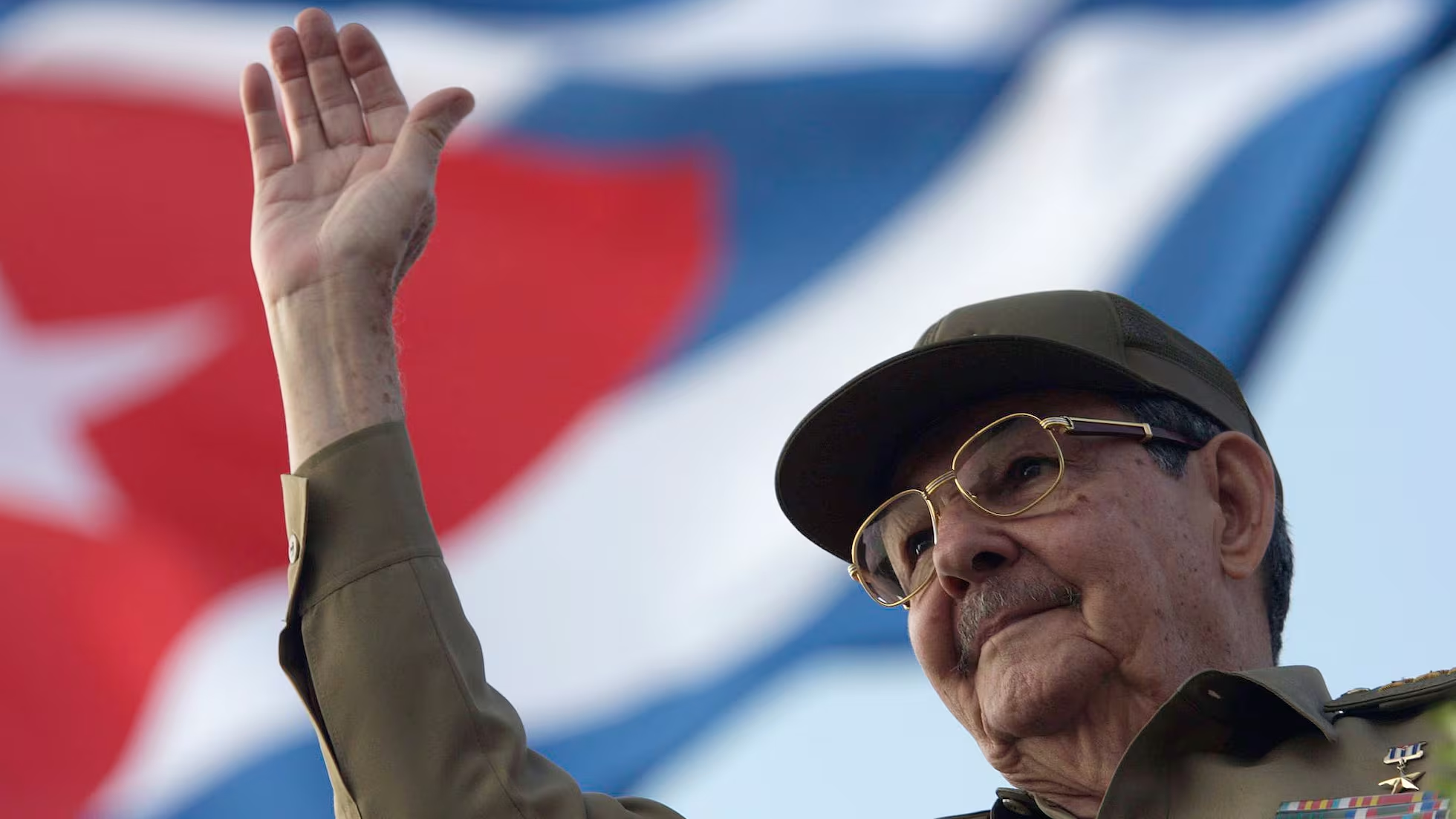

MIAMI — The criminal indictment filed by the United States against Raúl Castro raises an immediate question: can the former Cuban ruler actually be arrested, or will the case remain limited to a judicial and political gesture?
The practical answer is complex.
Receive breaking news alerts
Immigration, New York, Dominican Republic and investigative news delivered directly to your phone and computer.

Free — unsubscribe anytime.
The Department of Justice confirmed the filing of federal criminal charges for conspiracy to kill U.S. citizens, destruction of civilian aircraft, and murder, which activates the corresponding judicial mechanisms within the federal criminal justice system.
However, an indictment does not automatically mean an arrest.
To carry out an arrest, U.S. authorities would need physical access to the accused or effective international cooperation.
That scenario appears unlikely as long as Raúl Castro remains in Cuba.
The United States and Cuba maintain a limited diplomatic relationship, and there is no simple operational framework that would facilitate the surrender of a former Cuban regime leader wanted by Washington in a criminal case.
The situation could change if Castro traveled to a third country willing to cooperate with U.S. authorities.
In that case, international judicial cooperation mechanisms could be activated.
There is also a political dimension.
Although formally this is a criminal proceeding, the case inevitably carries diplomatic, historical, and geopolitical implications.
Raúl Castro is 94 years old and remains in Cuba.
For now, the indictment represents a judicial move with significant symbolic and legal weight, but with enormous practical obstacles to becoming an immediate arrest.
Even so, Washington’s political message is unequivocal: the Brothers to the Rescue case is not closed.

Comments (0)
Be the first to join the conversation.