
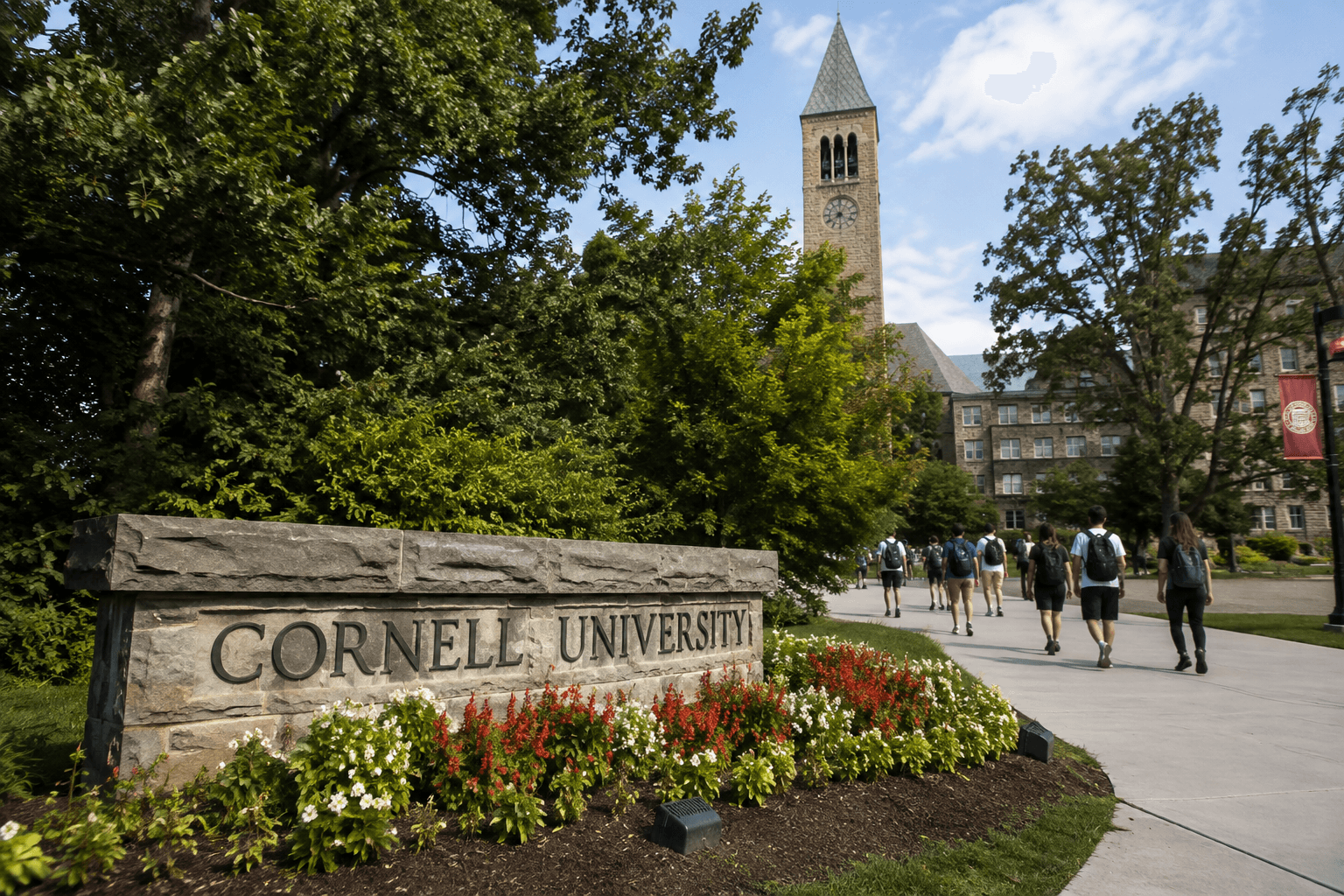

ITHACA, New York.— Cornell University has adopted a new rule explicitly prohibiting students from processing wild game in campus community kitchens, months after an unusual incident involving two students butchering a black bear inside a residence hall attracted widespread attention.
The university’s updated policy now states that processing wild or game animals in community kitchens is strictly prohibited.
Receive breaking news alerts
Immigration, New York, Dominican Republic and investigative news delivered directly to your phone and computer.

Free — unsubscribe anytime.
Cornell confirmed to its student newspaper that the restriction was introduced in direct response to the 2025 incident at Ganędagǫ Hall, where two students brought the carcass of a black bear they had killed and used a dormitory kitchen to process the animal.
Images and accounts of the incident quickly circulated online, generating criticism on social media and debate across the university community over whether preparing a hunted animal inside a shared residential kitchen was appropriate.
Months later, one of the students involved, Aaron Chin, publicly identified himself during an appearance on the MeatEater podcast and explained how the bear ended up on campus.
According to Chin, he and another Cornell student had been hunting approximately two hours away from the university when they killed the bear. Their original plan was to take the animal to a friend’s home, where they expected to process it away from campus.
Those plans unexpectedly changed, Chin said, when the friend experienced an emergency and could no longer make the property available.
Faced with finding another location, the students ultimately brought the bear to Cornell.
Chin maintained that they did not simply ignore university regulations. Before taking the animal into the residence hall, he said, the students carefully reviewed Cornell’s existing rules to determine whether processing game in a campus kitchen was specifically prohibited.
He told the MeatEater podcast that they had been particularly careful because they anticipated that their actions would attract scrutiny.
At the time, however, Cornell apparently did not have an explicit rule addressing the processing of legally hunted wild animals in community kitchens.
The episode quickly demonstrated the limits of that omission.
Reaction spread across campus and social media, while the presence of the bear in a student residence also attracted the attention of New York state environmental authorities.
The New York State Department of Environmental Conservation investigated the incident. According to reporting by NBC, an inspector visited the kitchen where the bear had been processed but found no violations of applicable environmental regulations.
That finding meant the students’ actions did not result in a state environmental violation, but the controversy left Cornell facing a separate question: whether its own residential policies adequately addressed an activity few university rulebooks would ordinarily anticipate.
The university has now answered that question.
By specifically banning the processing of wild and game animals in community kitchens, Cornell has eliminated the ambiguity that existed when the bear was brought into Ganędagǫ Hall.
The new language does not broadly prohibit hunting by students or the legal possession of game obtained in accordance with state regulations. Instead, it establishes a clear boundary concerning where such animals can be processed: shared kitchens inside university residential facilities are no longer an option.
The case illustrates how an extraordinary incident involving only two students can expose an unexpected gap in campus regulations and lead to a permanent policy change.
What began with a hunting trip roughly two hours from Cornell ultimately became a university-wide controversy, a state investigation and, months later, a new rule ensuring that another wild animal will not be butchered in a Cornell dormitory kitchen.

Comments (0)
Be the first to join the conversation.