
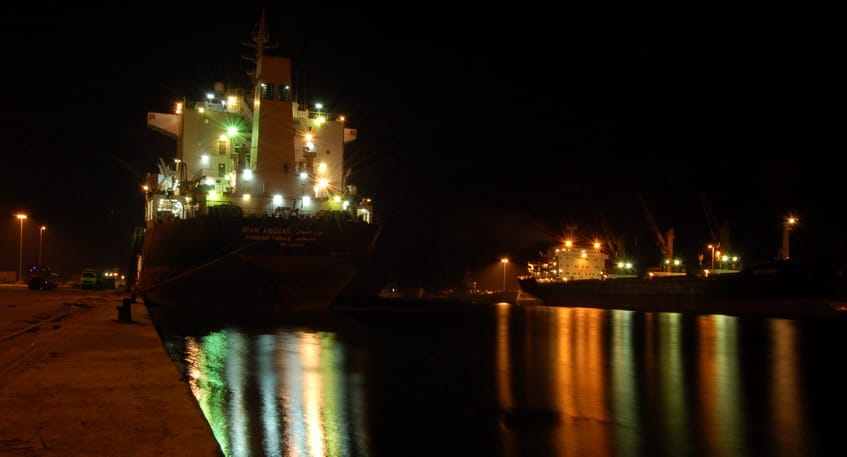

DAMASCUS.— For decades, Russia’s military presence on Syria’s Mediterranean coast represented something larger than a collection of bases. Tartous and Hmeimim became symbols of Moscow’s influence in the Middle East and gateways through which Russia projected military power far beyond Syrian territory.
Now, that relationship is entering a different chapter.
Receive breaking news alerts
Immigration, New York, Dominican Republic and investigative news delivered directly to your phone and computer.

Free — unsubscribe anytime.
Syria and Russia have reached a memorandum of understanding over the future of the Russian facilities at Tartous and Hmeimim following approximately 18 months of negotiations, according to information released Sunday by the Syrian Foreign Ministry and reported by Reuters.
The agreement addresses one of the most sensitive questions left by Syria’s political transformation: what would happen to the military infrastructure that gave Russia a strategic foothold on the Mediterranean.
Under the new understanding, Syria will assume control of facilities considered civilian in nature, including Hmeimim Airport and a commercial pier at the Port of Tartous. Those facilities are expected to be gradually incorporated into Syria’s civilian administration.
The arrangement also changes the role envisioned for military installations. Rather than continuing exclusively as traditional Russian military bases, some facilities are expected to be reorganized as joint training and qualification centers under new arrangements between Damascus and Moscow.
The two countries established a period of up to three months to carry out the transition, according to the Syrian account of the agreement.
For Russia, Tartous has long carried exceptional strategic value. The facility gave Moscow direct access to the Mediterranean and became an important logistical point for Russian naval operations. Hmeimim, meanwhile, emerged as the center of Russian air operations in Syria after Moscow intervened militarily in the country in 2015.
That history makes the new agreement more than an administrative restructuring.
It reflects the effort by Syria’s authorities to redefine relationships inherited from the previous era while avoiding an abrupt rupture with a country that has maintained a significant military and political presence on Syrian territory.
For Moscow, the arrangement offers a path to preserve a relationship with Damascus, although under conditions different from those that governed Russia’s presence for years.
And for Syria, the agreement carries another meaning: greater control over installations on its own Mediterranean coast at a moment when the country is attempting to rebuild its institutions and redefine its place in the region.
The Russian presence is not simply disappearing overnight. But after years in which Tartous and Hmeimim embodied Moscow’s reach inside Syria, the rules governing that presence are being rewritten.

Comments (0)
Be the first to join the conversation.