
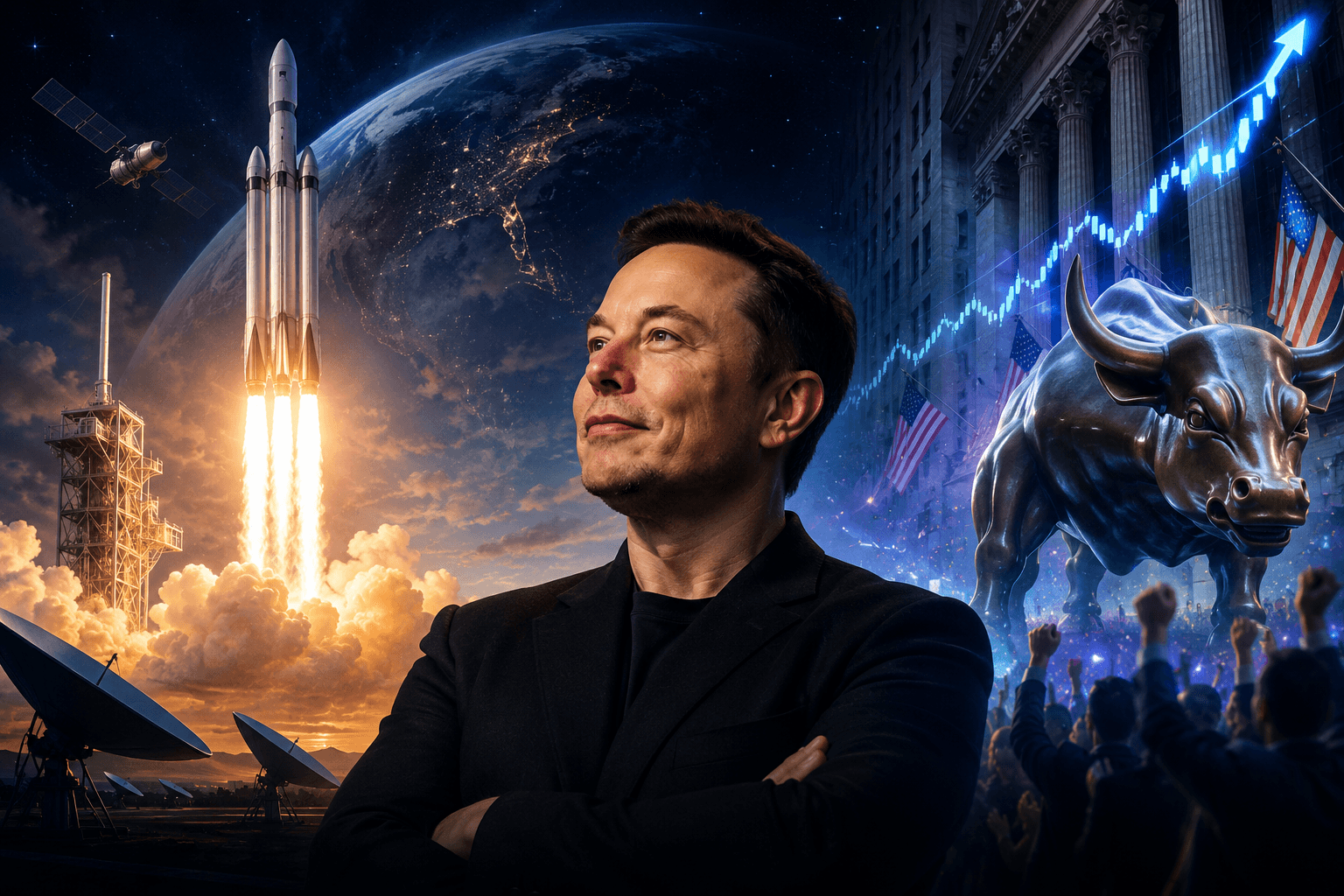

NEW YORK — In a landmark moment for global financial markets, Elon Musk’s aerospace giant, SpaceX, officially debuted on the Nasdaq Stock Market on June 12, 2026, in what analysts describe as the largest initial public offering (IPO) in history. The company’s public debut instantly transformed Musk into the world’s first trillionaire and cemented SpaceX’s position among the most valuable corporations on Earth.
The IPO was priced at $135 per share, raising approximately $75 billion and initially valuing the company at nearly $1.8 trillion. Investor demand far exceeded expectations, with shares opening around $150 and surging throughout the trading session, pushing SpaceX’s market capitalization above $2 trillion.
Receive breaking news alerts
Immigration, New York, Dominican Republic and investigative news delivered directly to your phone and computer.

Free — unsubscribe anytime.
Founded in 2002 by Elon Musk, SpaceX has evolved from a startup challenging traditional aerospace contractors into the dominant force in commercial space launches, satellite communications, and emerging space infrastructure. The company’s success has been driven largely by its reusable rocket technology, the rapid expansion of its Starlink satellite internet network, and its ambitious plans for interplanetary transportation through the Starship program.
Investor Enthusiasm Meets Financial Questions
Despite the extraordinary market reception, SpaceX’s IPO has sparked debate among financial analysts. While investors have embraced the company’s long-term vision, regulatory filings show that the company remains unprofitable, reporting billions in annual revenue but continuing to post operating losses as it invests heavily in future technologies and infrastructure.
Supporters argue that SpaceX should be valued not as a traditional aerospace company but as a transformative platform spanning satellite communications, artificial intelligence, defense technologies, and future space-based industries. Critics, however, warn that the company’s valuation reflects investor optimism more than current financial fundamentals.
Musk Retains Control
Although the IPO made a small percentage of SpaceX shares available to public investors, Musk continues to maintain overwhelming control of the company through a special voting structure that preserves his decision-making authority. Industry observers note that the arrangement allows SpaceX to access public capital while remaining firmly under Musk’s strategic direction.
A Turning Point for Global Markets
Financial experts believe the successful offering could open the door for a new wave of mega-technology IPOs, including potential future listings from major artificial intelligence companies. The scale of investor demand for SpaceX demonstrated that public markets remain eager to finance companies pursuing transformative technologies despite concerns about profitability.
For Musk, the IPO represents more than a financial milestone. During celebrations following the listing, he reiterated SpaceX’s long-term mission: making humanity a multi-planetary species and establishing a permanent presence beyond Earth.
As trading begins and Wall Street evaluates the company’s future prospects, SpaceX’s historic debut marks a defining chapter not only for the aerospace industry but also for the future of technology-driven capital markets

Comments (0)
Be the first to join the conversation.